
LLMO strategy: 3 steps to greater visibility in Google AIOs, ChatGPT, and more
LLMO strategy: 3 steps to greater visibility in Google AIOs, ChatGPT, and more
[[callout]] TL;DR
- Customer focus is the starting point: without a genuine understanding of the target group, content remains irrelevant even for LLMs.
- Content beats optimization: visibility is created through differentiated formats such as thought leadership content and product-led content, not through generic SEO texts.
- Technology and structure are essential: Server-side HTML, clearly structured passages, and semantic markups increase the chance of appearing in AI responses.
- DDistribution is a deciding factor: Visibility in LLMs also comes from mentions in third-party sources. Actively use social media, communities, partnerships, and newsletters.
🍿 Don't feel like reading? In the video on AI search & LLMO, I'll show you the most important strategies directly in the application.
[[callout end]]
Quick recap: Why classic SEO isn't enough
In part 1 of this blog series on LLMO, I explained how AI is fundamentally changing organic search: instead of ten blue links, AI-generated answers now dominate. If you're not visible there, you lose relevance. Even with stable SEO rankings.
LLMO (Large Language Model Optimization) is becoming the central strategy for being present in AI searches. It's not just about traffic, but about mentions of your brand in AI responses that lead users directly to a decision.
The big opportunity: Those who appear in AI responses today are automatically recommended. LLMs sell your solution for you. Provided, of course, that you offer the right content on the right channels. This is where we come in.
How can we become visible in LLMS?
For many brands, visibility in LLMs arises in two ways:
- They become the source themselves—e.g., through content on their own website. This is relatively similar to classic SEO.
- They are mentioned in sources that LLMs draw on.
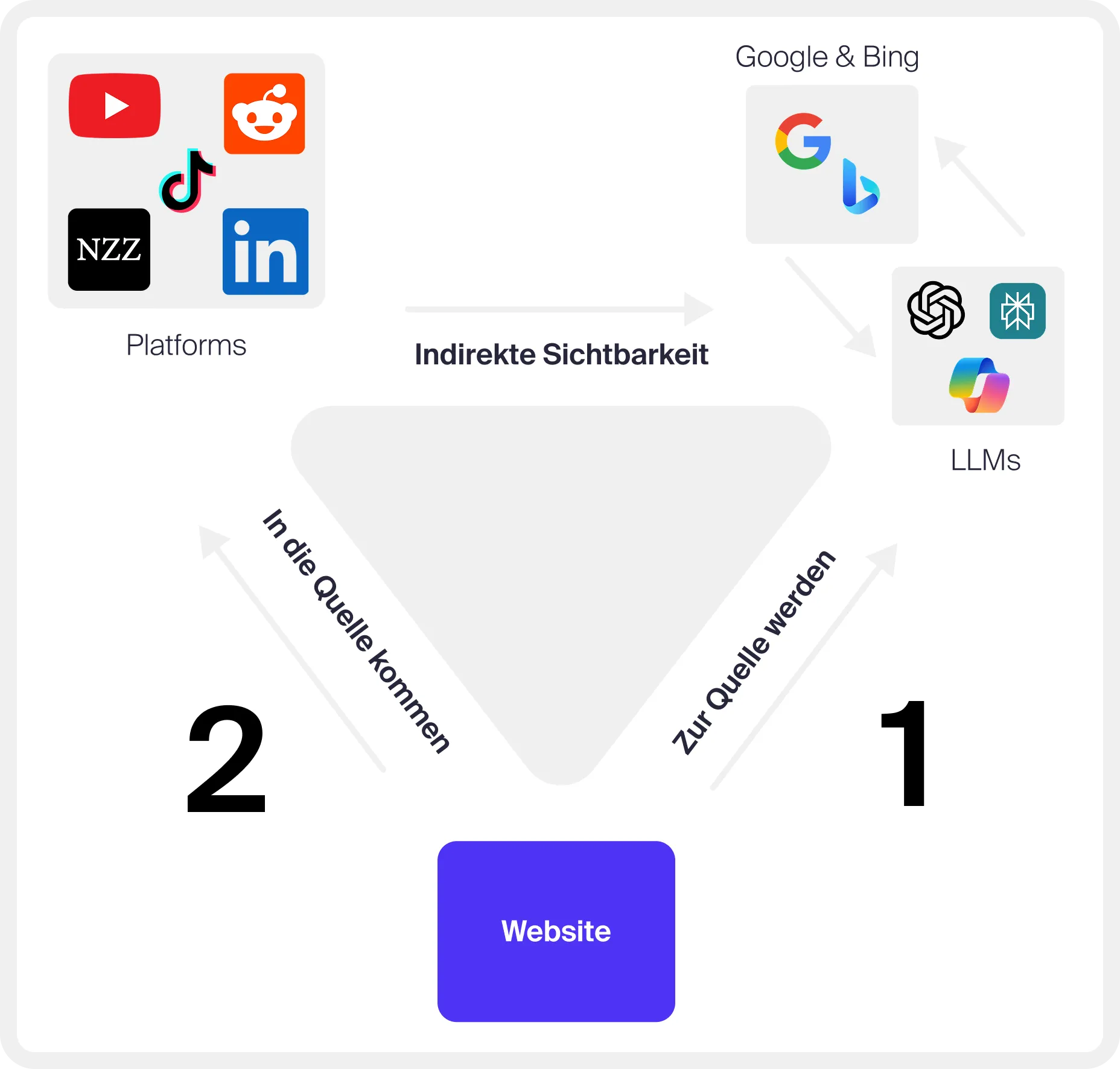
BBoth approaches are correct. The key is to appear in the right context.
There are already strategies and tactics you can use to establish your brand directly as a source in LLMs or bring it into existing discussions on third-party platforms. Here are the three most important steps to achieving greater visibility in LLMs.
Three steps to developing an LLMO strategy
1. Analysis: Generating good content ideas with audience research
When we talk about visibility and optimization for LLMs, we have to admit that we currently have very little data on how people actually prompt. This data gap presents us with challenges.
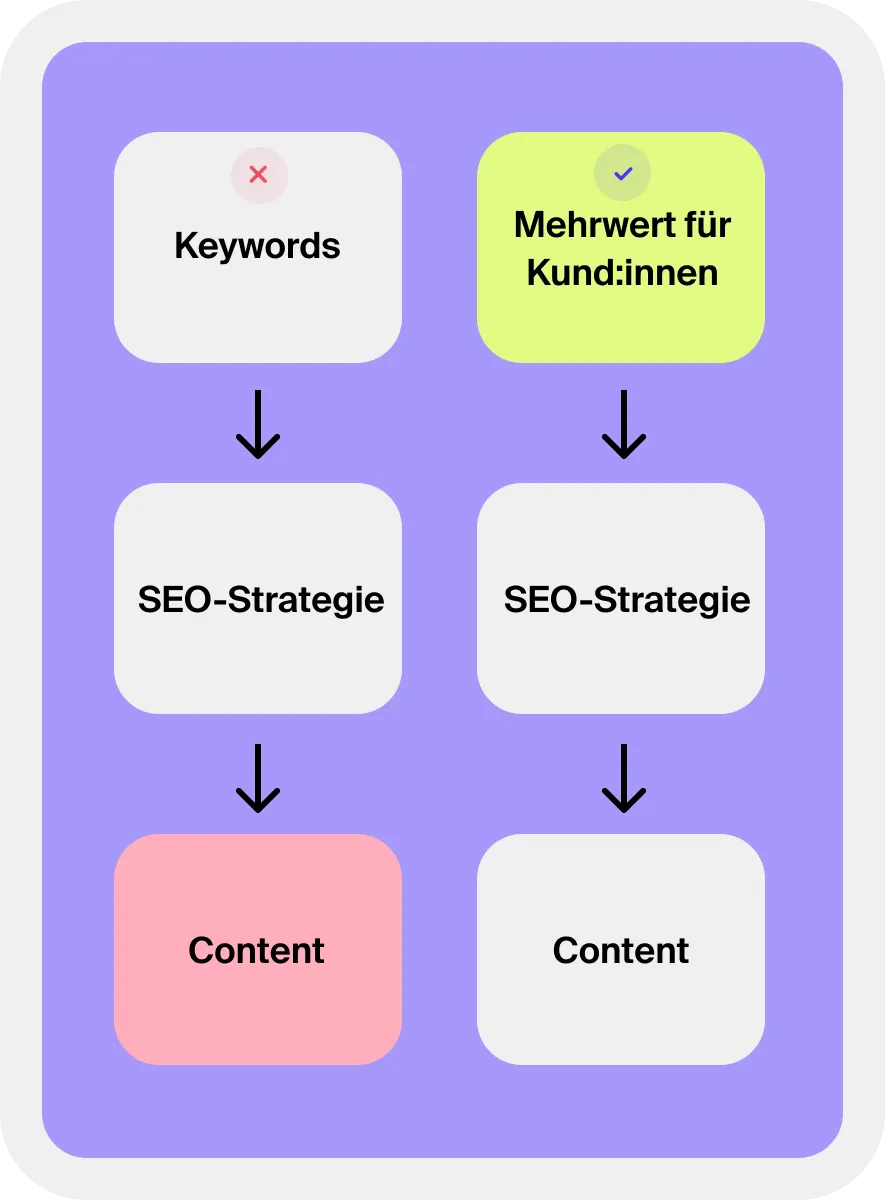
My perhaps somewhat controversial opinion on this is that less data is only problematic if we don't really understand our customers.
In a world without reliable keyword data, another factor becomes crucial: proximity to the target audience. Many companies start their content planning with search volume, but don't know the actual needs of their users. This leads to content that is well-intentioned but misses the mark. This distance from the target audience is a classic marketing mistake and particularly widespread in SEO circles.
[[callout]] Real-world example: Cybersecurity providers
Most SEO strategies in recent years have focused on generic top-of-funnel topics. An article such as “What is cybersecurity?” may seem useful at first glance, given the high search volume associated with the term “cybersecurity.” But anyone who wants to reach CTOs with 15 years of professional experience will quickly realize that this target group has long since moved on to more complex questions. Which ones exactly? This can only be found out through audience research.
Valuable visibility is not created by Wikipedia-like basic articles, but by tailor-made content that addresses difficult questions from the target group that cannot be answered in a short paragraph.
[[callout end]]
However, the lack of data is not only an obstacle, but also an opportunity. It forces us to speak directly to the target group, ask relevant questions, listen, and use this information to create content that is truly helpful.
The best sources for genuine audience research are often closer than you think:
- Customer interviews provide a deep understanding of pain points, language, and decision-making processes.
- Sales calls reveal the questions that are asked before a purchase—ideal for product-led content.
- Onboarding feedback from support or customer success helps identify expectations and misunderstandings.
- Reddit, Quora, or Slack Communities provide insight into real discussions, without filters.
- Onsite search and chat histories on your own website reveal what users really want to know.
- Product managers and subject matter experts often know the key differentiators—you just have to ask them.
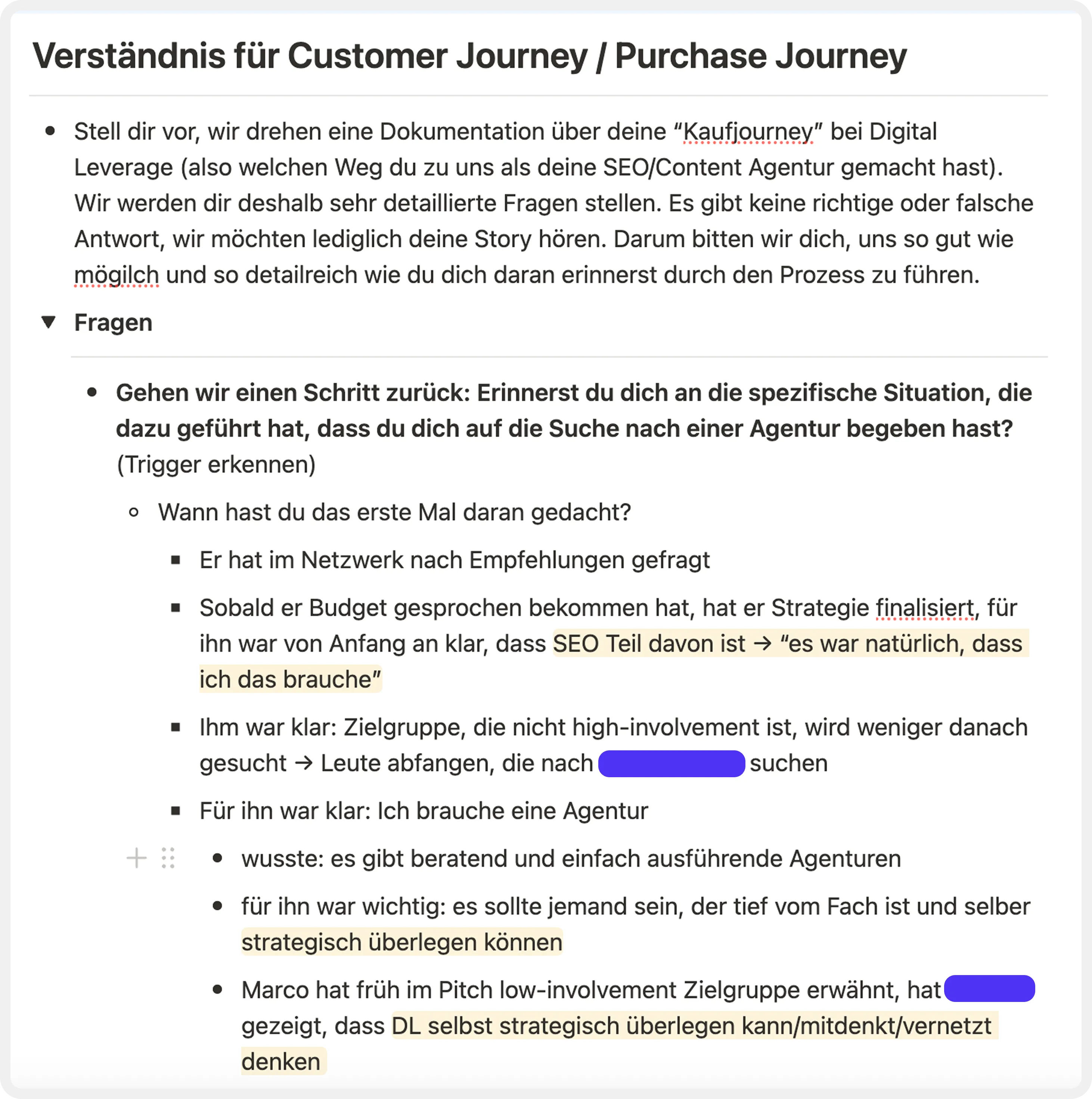
Once we know what the target audience is interested in and what the most important pain points are, we can get started on the content strategy. One of the most important strategic levers for visibility in LLMs is choosing the right content formats.
2. Strategy: Design content strategy for LLMs
Now that we know where the target group's pain points lie, what topics interest them, and what their goals and desired outcomes are, we can map these to content formats along the customer journey.
However, simply reproducing what already exists is no longer enough. LLMs such as ChatGPT answer most questions directly in their own interface. A brand or website is only cited if the content offers users real added value.
There are two approaches to delivering this added value:
Thought Leadership Content deliberately goes against the consensus, formulates new theses, shares its own studies, and provides impetus.
Product-led Content, on the other hand, goes along with the consensus, but shows which product is the best solution in which situation. Even in the age of AI, users need concrete brand or product suggestions when they have to make purchasing decisions.
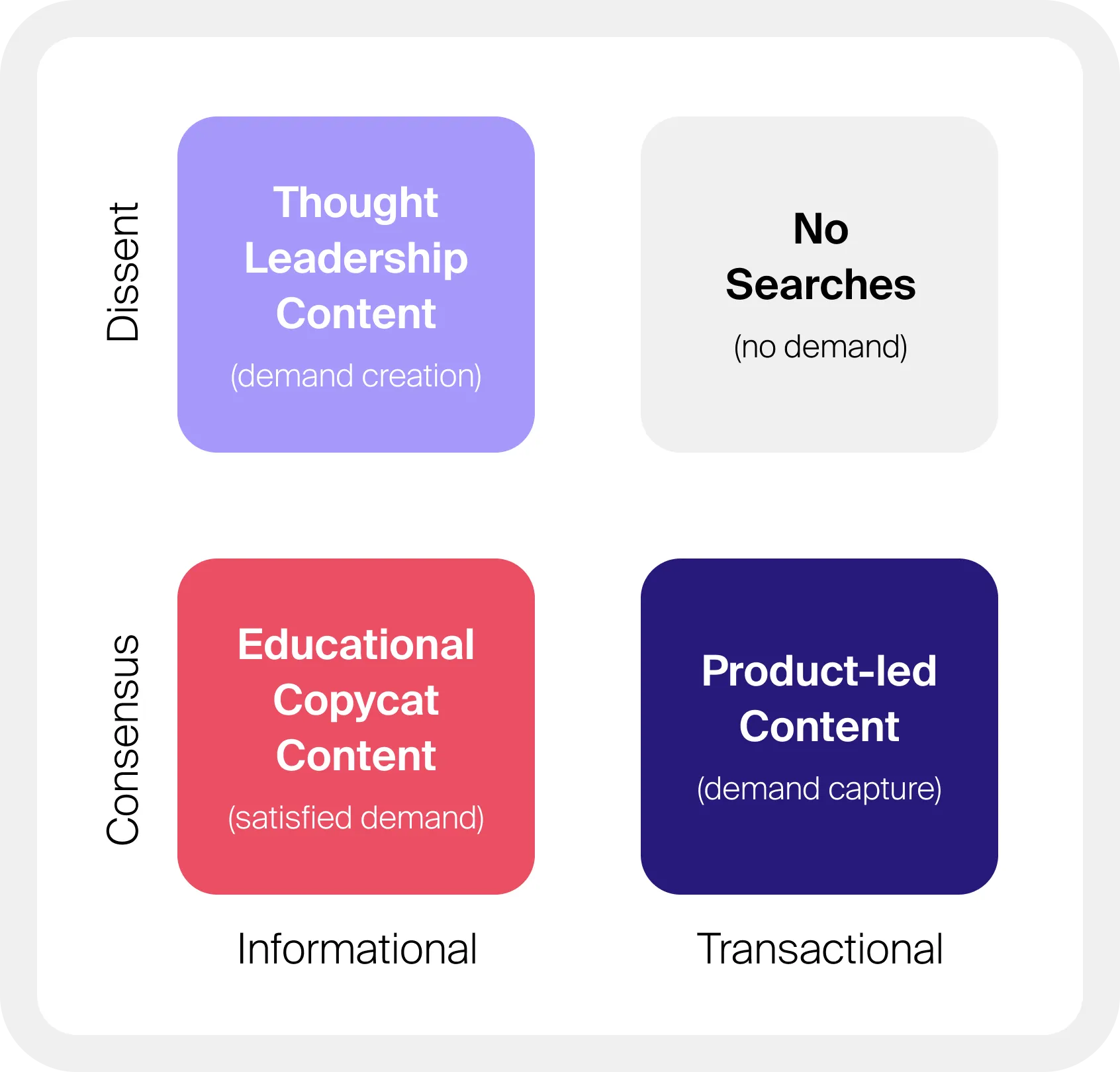
Both formats fulfill different functions along the customer journey. Thought leadership builds trust, creates awareness, and ensures that a brand is “top of mind.” Product-led content captures the target audience when they are comparing different solutions, provides significant support during the purchasing process, and helps users make their final decision.
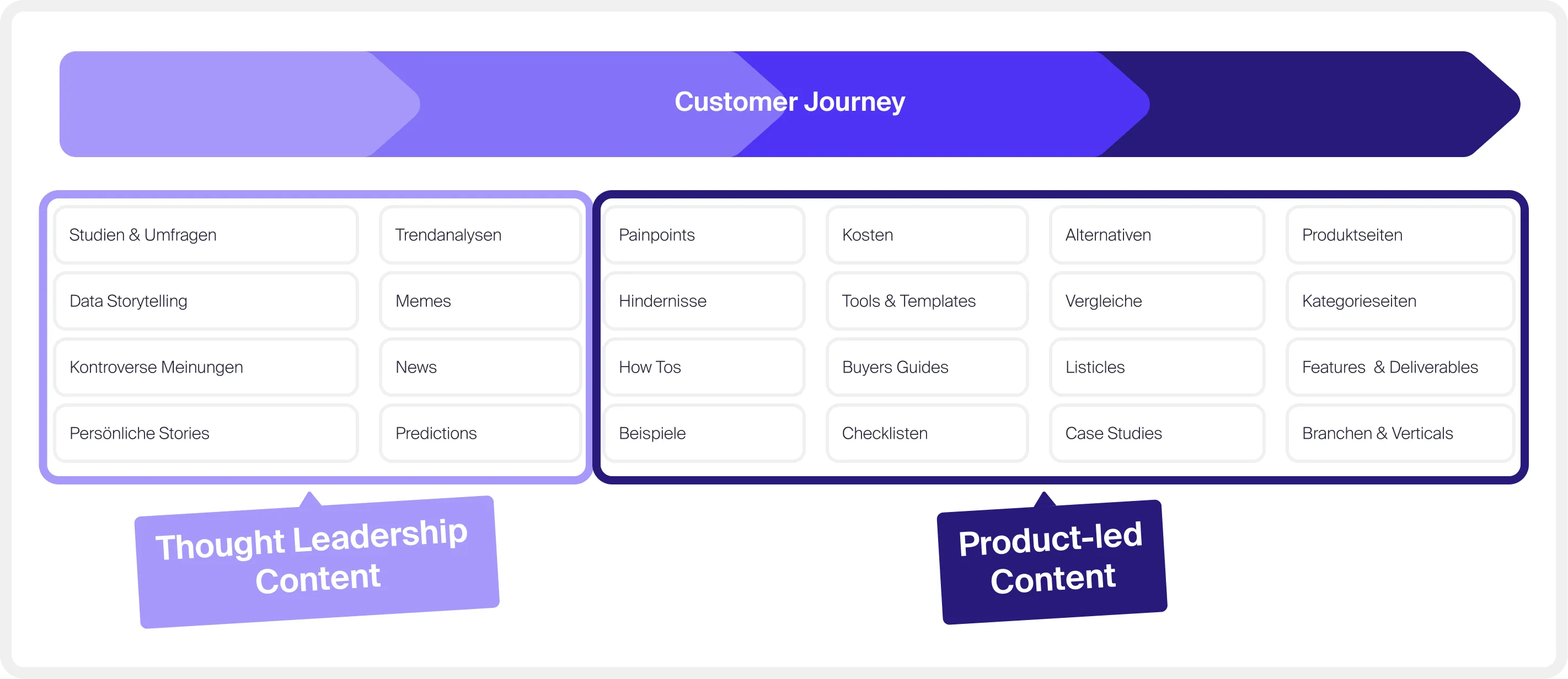
Let's take a closer look at the two content formats:
{{blog-cta}}
Thought Leadership Content
Thought Leadership content (TLC) thrives on attitude and originality. It does not provide a summary of the status quo, but rather questions the existing order or introduces new ideas. Through TLC, authors share their own insights, publish studies, or formulate theories that make the industry think. It is the only valid alternative to generic top-of-funnel (ToFu) content.
As the Ahrefs study mentioned in our last article proves, brand mentions on the internet correlate most strongly with visibility in LLMs. This underscores why Thought Leadership Content (TLC) is not only desirable but essential in the age of AI: without differentiated perspectives and your own insights, you simply won't be mentioned online. No one quotes or shares content that merely recycles the status quo. Only those who collect their own data, provide new perspectives, or comment on current developments will be quoted and shared..
TLC not only leads to more mentions, but also increases engagement and builds trust. When it comes to complex topics or far-reaching decisions, people want to understand exactly how something works. Reading a short AI summary is often not enough. If the content effectively offers something new and exciting, many people are happy to take the time to dive deeper and read the TLC.
[[callout]] Practical example of Thought Leadership: Data study
We published our study on domain strategy on our blog, translated it for our newsletter, and posted it several times on LinkedIn. A welcome spillover effect was that the study was picked up and discussed by a German SEO podcast. Overall, we received 26 mentions and backlinks by sharing this study.

[[callout end]]
Product-led Content
Product-led content (PLC) is the modern form of purchasing advice. PLC provides exactly the context that LLMs need to recommend your solution to the right people. When someone asks a specific question, LLMs don't look for general explanations, but for precise answers. It becomes clear who clearly shows: Who is the product intended for? What can it do better than others? And why is it relevant in this situation?
The difference to classic SEO content lies in the focus. It's not about covering a topic broadly. Rather, it's about answering a specific question better than others, addressing the right pain points, presenting solution proposals, and building a bridge to your own product.
[[callout]] Practical example: Product-led content: Costs
We wrote an article on the topic of “content marketing costs” for our own website. The article made it into the LLM's response as well as the featured snippet.

[[callout end]]
3. Implementation: Continuously create, optimize, and distribute
To be successful in the new reality, constant investment is needed at various levels.
Technical basis: Visibility begins in HTML
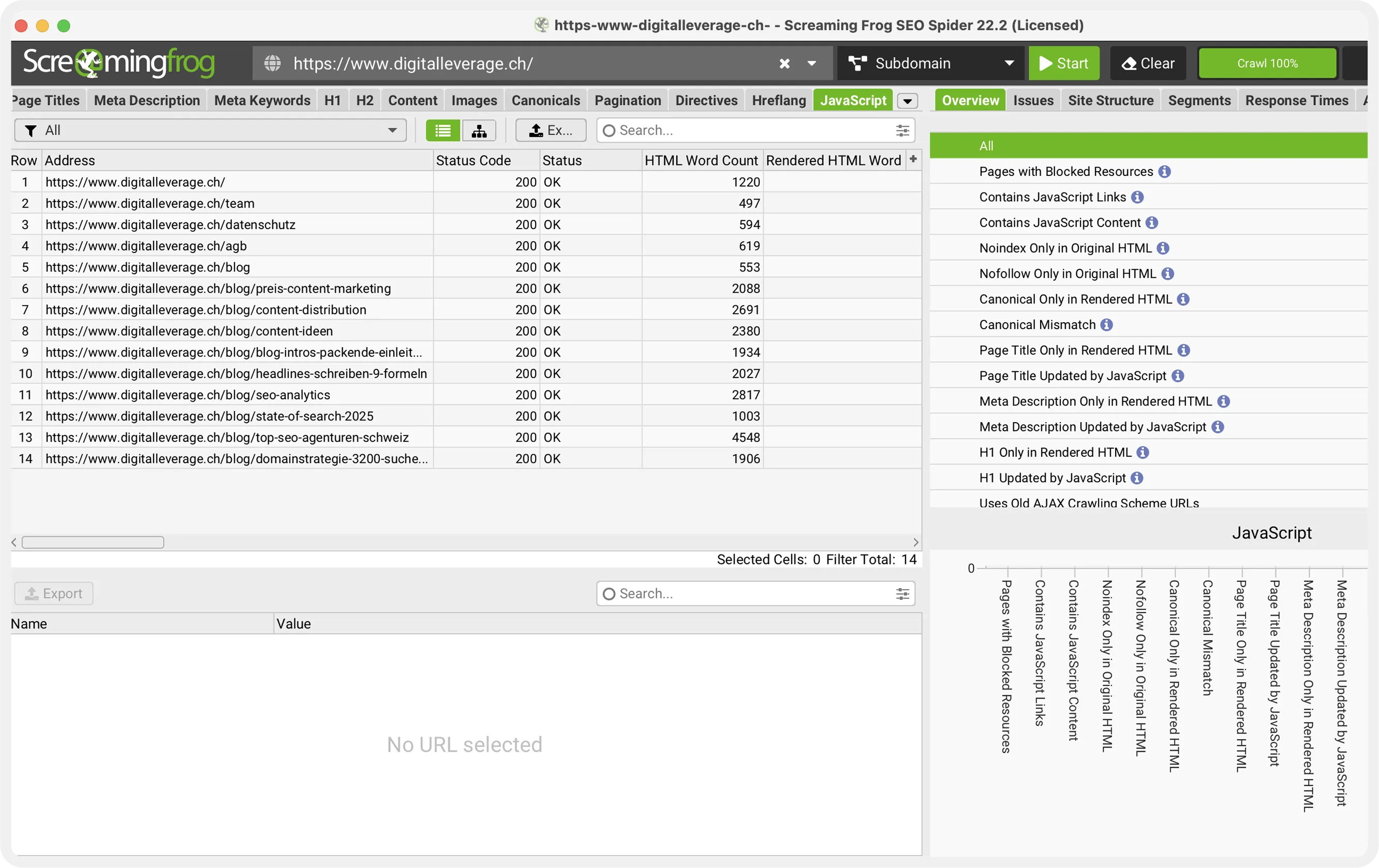
LLMs such as ChatGPT or Gemini analyze your website's HTML. If your content is only loaded via client-side JavaScript, the AI often cannot see anything. In order to be considered as a source at all, your content must be visible on the server side. Elements such as headings, texts, prices, or FAQs are particularly important. Load them directly with the initial page request.
Use SSR (Server-Side Rendering) or dynamic rendering so that the various bots can understand your page. Screaming Frog is a helpful tool for checking whether this is already working.
Content: Structuring content in an LLM-friendly way
One of the major differences between SEO and LLMO is that LLMs do not analyse or index entire pages, but focus on individual passages (known as ‘passage indexing’). They evaluate whether a section answers a specific question precisely, regardless of the rest of the content on the page. This is precisely why how you prepare and structure your content is crucial.
Each passage should cover only one topic and be clearly defined. Keep your content ‘MECE’, i.e. ‘mutually exclusive, collectively exhaustive’. This increases the chance that this particular section will be selected and quoted as the answer.
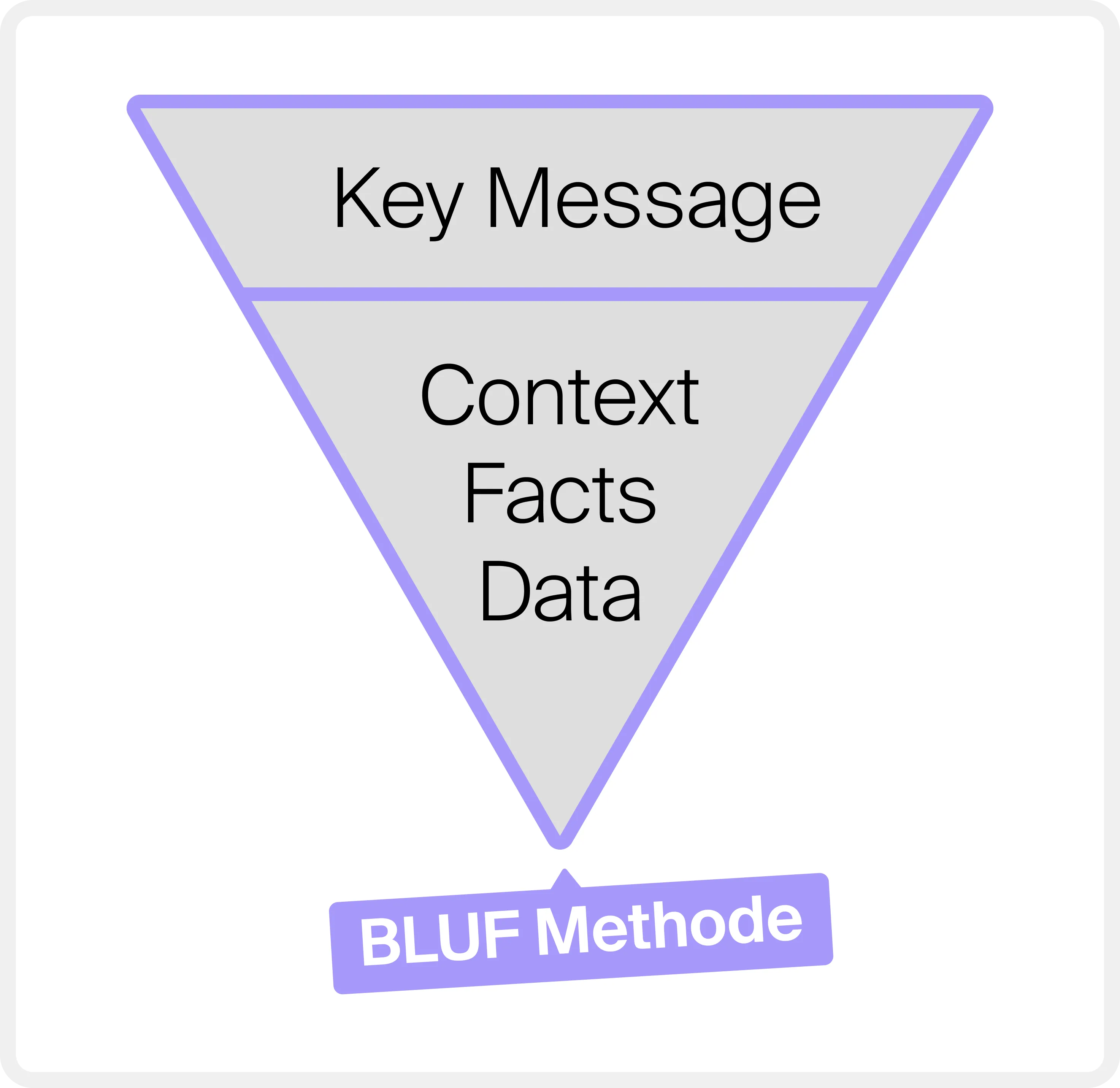
What else you can do: Use a table of contents with anchor links (see this blog post) to make important passages easy to find. Use specific questions in H2/H3 and deliver the key message right at the beginning of your answer (bottom line up front).
Add structured data such as FAQ or QA markup to enhance semantic relevance and use direct quotes where appropriate. Ideally, these should come from actual interviews and not just be added shortly before publishing.
Distribution: Be visible beyond your own website with content
Even the best content only has an impact when it is optimised for LLMs and distributed on external platforms. Visibility in LLMs is not only achieved through direct content optimisation for LLMs, but also through mentions on third-party sources. Ideally, you should use your content ideas multiple times.
The rule of thumb is: the better your initial idea and the product-led or thought leadership content, the easier the distribution will be.
Successful distribution via appropriate channels should therefore not be an afterthought, but should be taken into account when selecting and prioritising topics.
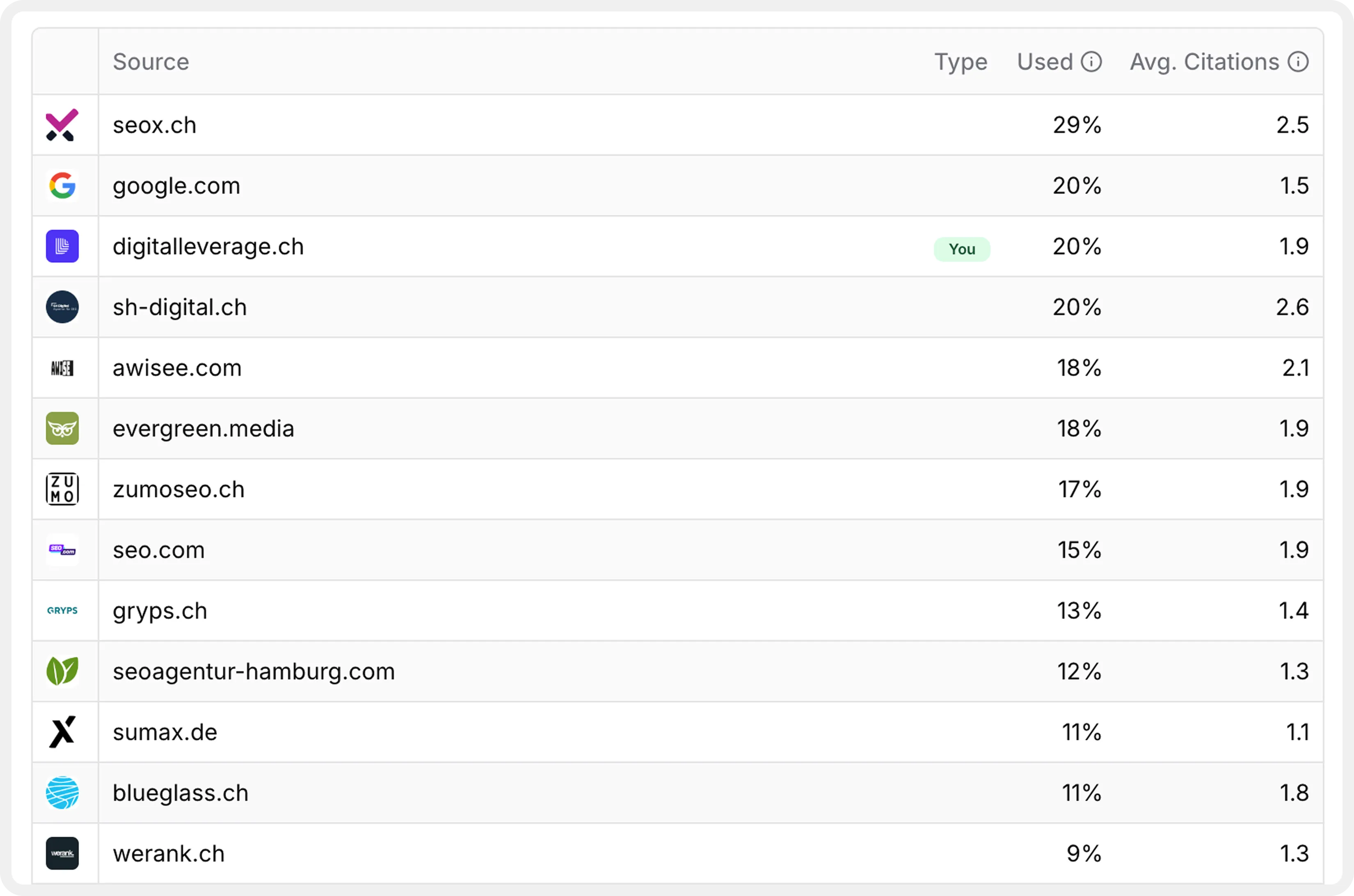
Unsure which channels are right for your business? Then use a prompt tracking tool to identify the sources that appear most frequently in responses from LLMs such as ChatGPT.
[[callout]] Practical example: Prompt tracking with Peec AI
Based on the pain points and most important questions of your target group, you can set up keyword tracking in tools such as Peec AI. Do Wikipedia or Reddit, for example, appear repeatedly as sources? Or perhaps the listicles on comparison platforms? If so, this is a good sign that it is worth investing there.
[[callout end]]
At Digital Leverage, we rely on the following distribution measures:
- Entries: Register your company on popular comparison platforms, optimise your Wikipedia entry (if you have one) and comb through your competitors' backlink profiles to ensure you are visible wherever products and solutions are compared. This is not necessarily about distributing existing content. Nevertheless, this measure is important because it is simple but effective. Currently, when searching for products from LLMs, listicles such as ‘The Top SEO Agencies in Switzerland’ are often used as sources. So you can write such a listicle yourself, as we have done, or contact external websites to ask them to include you in their list.
[[callout]] Practical example: Entries & Listicles
We are listed here by another SEO agency in a ranking after I politely asked if they could include us on the list as well.

[[callout end]]
- Social media: Distribute your content across various social media channels. For example, use LinkedIn if you are targeting a B2B audience. This will help you build visibility on the platform and also give you a better chance of being mentioned by LLMs.
[[callout]] Repurposing for LinkedIn
We have converted the learnings and frameworks described in this article into several LinkedIn posts, for example: Search engines vs LLMs, LLMs sell your solution for you, Content formats for LLMO, etc.

[[callout end]]
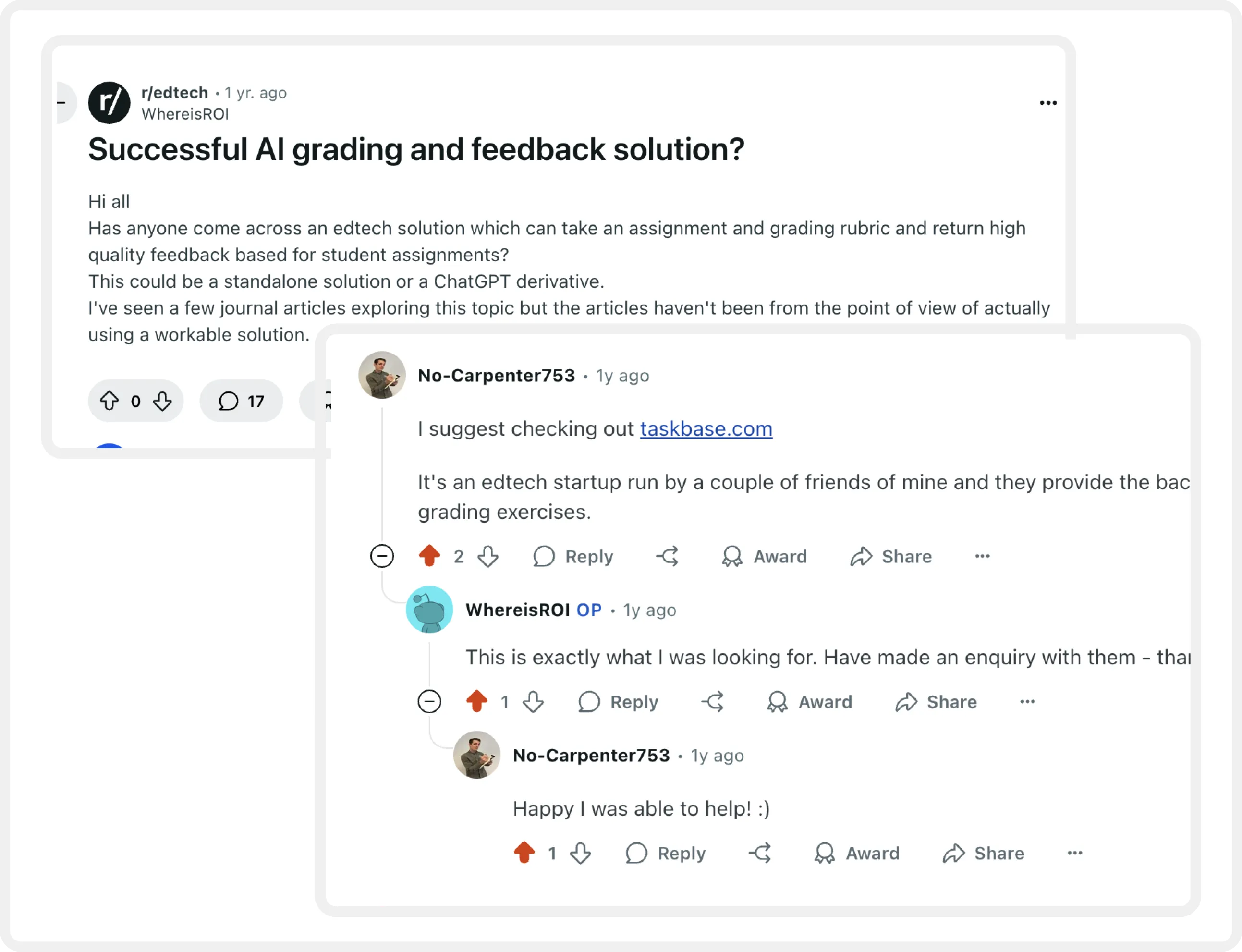
- Community: Forums such as Reddit have gained significant visibility in Google in recent years, and user responses are often reflected in LLMs. To gain visibility here, we recommend tracking conversations in your niche or industry and actively participating in forums, chats, and communities. Respond to questions related to your content topic. Mention your own perspective or link to your content piece or website where appropriate. Be sure to be helpful and not come across as salesy.
[[callout]] Practical example: Answering questions on Reddit
Here, someone on Reddit was looking for exactly the solution that one of my clients offers. A quick reference to the website was enough, and my client not only got a mention, but also gained a new lead.
[[callout end]]
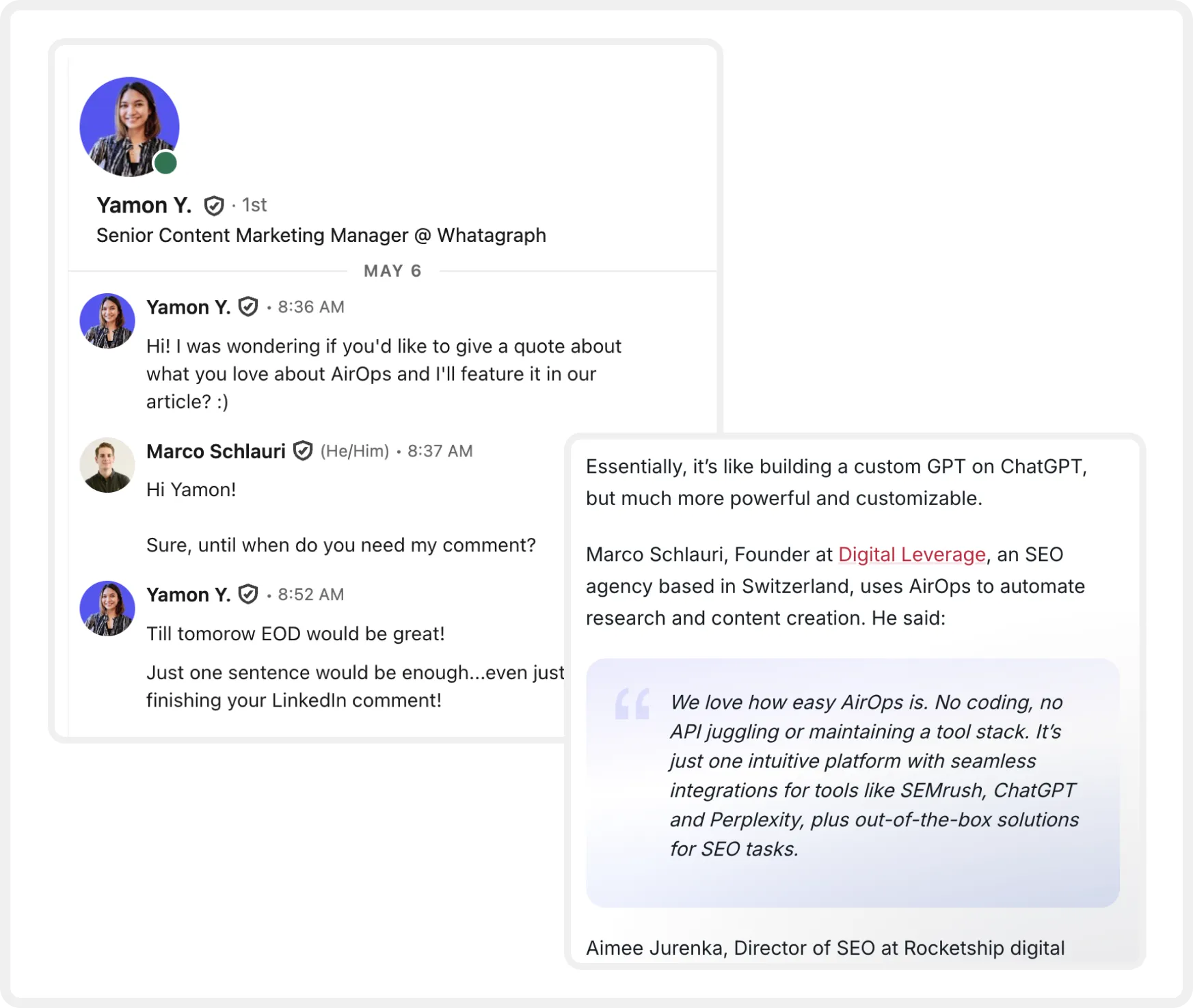
- HARO: Answer questions from other writers and journalists (Help A Reporter Out). Sign up for newsletters in your niche and answer reporters' questions to be quoted as an expert. If they like your answer, they will mention you by name and often link to your website or profile.
[[callout]] Practical example: Answering reporters' questions
Here, a content marketing manager pinged me on LinkedIn to ask if I would like to give my two cents on the flood of AI tools. I was quoted accordingly in her article.
[[callout end]]
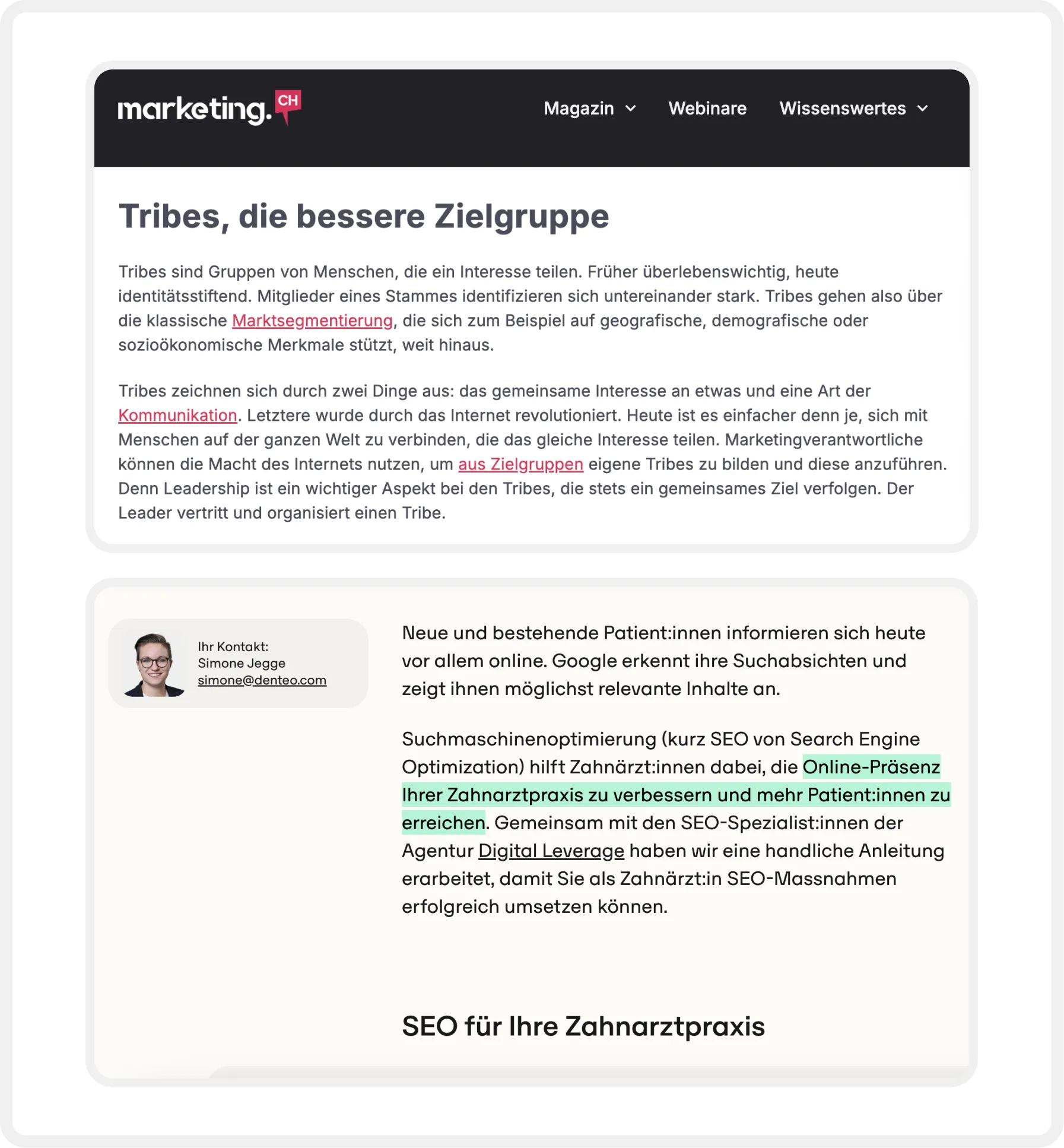
- Partners: Use partnerships to increase your reach and write guest posts on topic-relevant websites that are already cited in LLMs. This will help you gain visibility indirectly.
[[callout]] Practical Example: Guest Blogging
For example, we regularly write for platforms such as marketing.ch or the blogs of other agencies (with a similar target audience), clients (see Denteo below) and other partners.
[[callout end]]
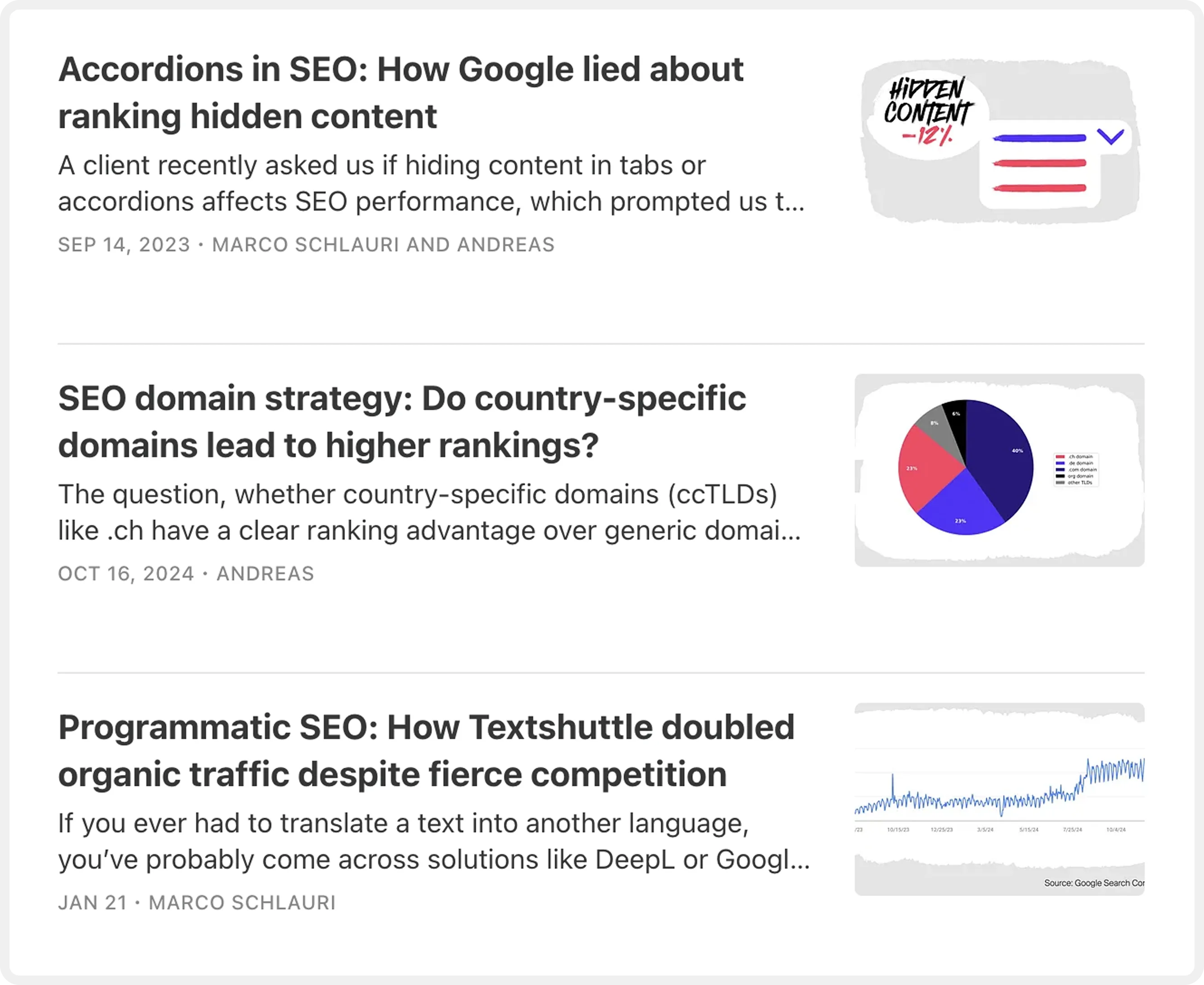
- Newsletter: Start your own newsletter or sponsor an existing newsletter with good reach in your industry or niche.
[[callout]] Practical Example: Newsletter
We use Substack as a platform ourselves and translate many of our articles, studies and case studies into newsletter format. We make sure that the examples we share on SEOexamples.com are as short and concise as possible. As of July 2025, we have just under 700 subscribers who support the distribution of new content.
[[callout end]]
- Podcasts: Participate in relevant podcasts and share your expertise live, refer to frameworks and studies, and share your own perspectives with your target audience.
[[callout]] Practical Example: Podcast
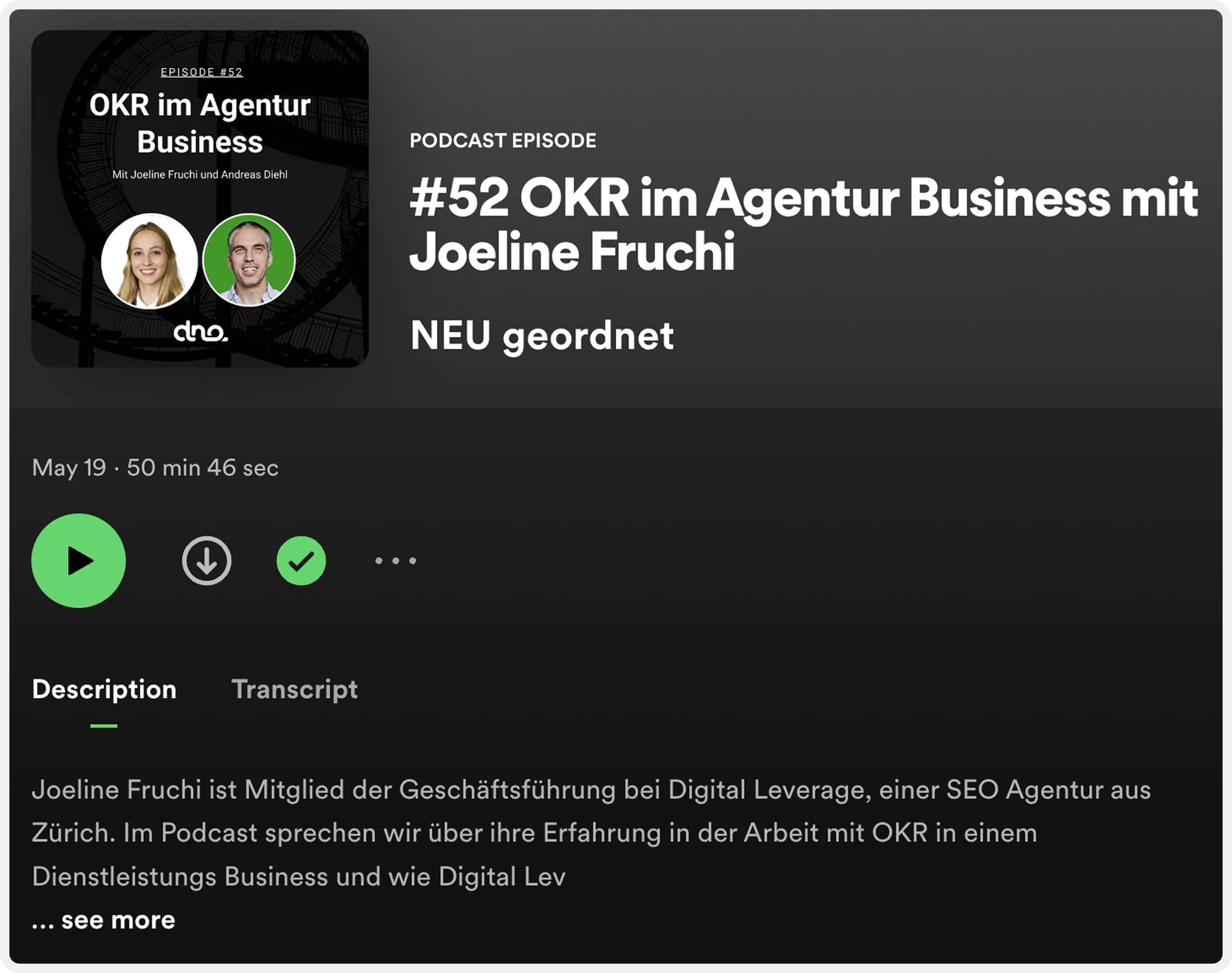
UOur Head of Content, Joeline Fruchi, was invited by Andreas Diehl, thought leader on OKR, to a podcast to discuss OKRs. Another podcast with Andreas Diehl on LLMO is already in the pipeline.
[[callout end]]
- Ads: Run ads for product-led content that performs well. Sure, this doesn't bring direct visibility in LLMs, but if you're never found, you can't target users or get them excited about your newsletter. If your content is compelling, you'll gain visibility and increase the chance that users will share your content.
[[callout]] Practical Example: Ads
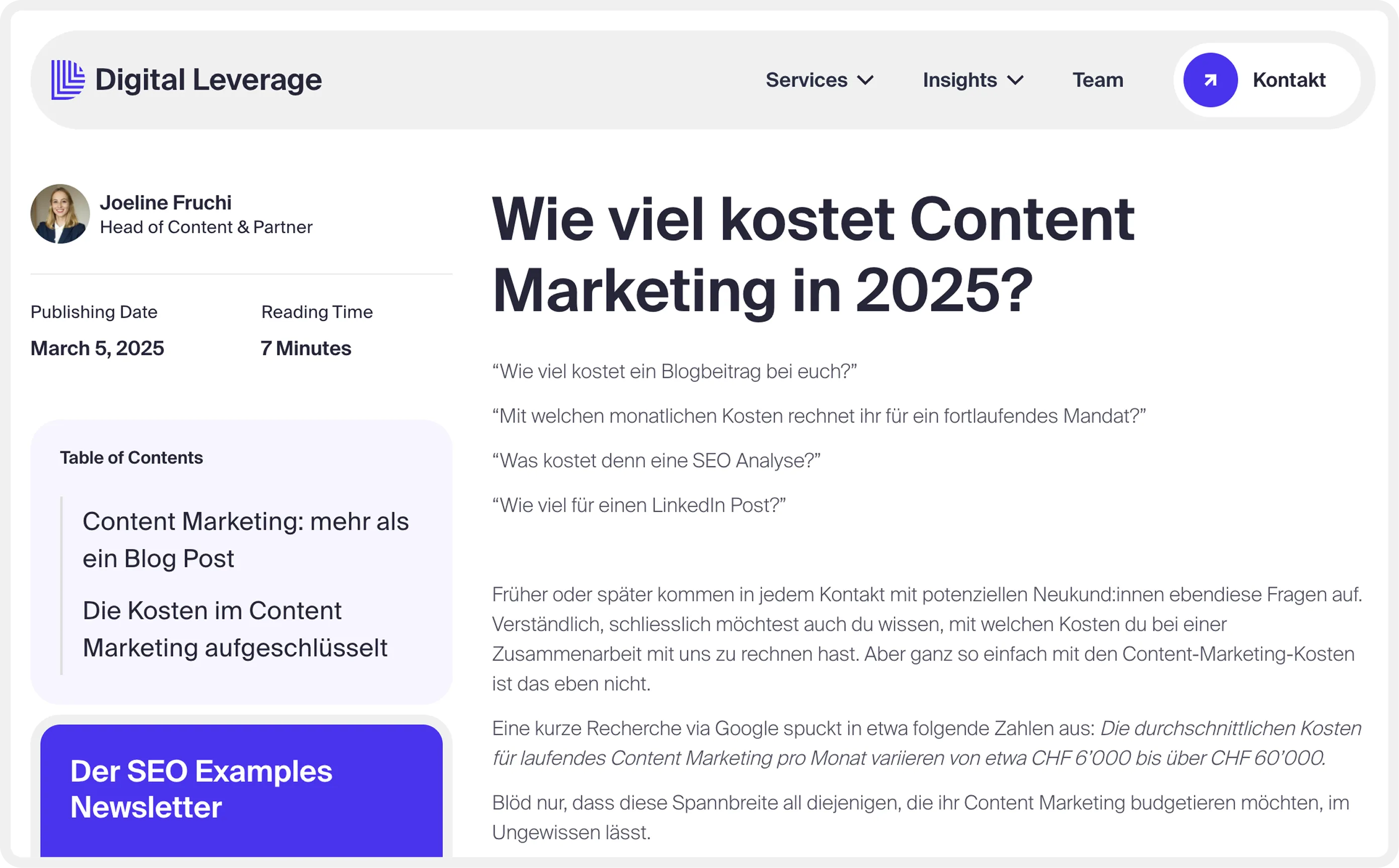
We place Google Ads on the homepage, important landing pages and BoFu articles such as ‘How much does content marketing cost?’, which we know will generate not only clicks but also conversions.
[[callout end]]
Conclusion
An effective LLMO strategy does not start with new tools or technical quick wins, but with the target group. Those who truly understand their questions, pain points and decision-making logic lay the foundation for content that plays a role in AI responses. After all, LLMO strategies work like any other successful marketing strategy: they are customer-centric.
Optimisations only make sense if the content is substantial and differentiated. The goal is not to maximise rankings or traffic, but to build trust through thought leadership or product-led content, facilitate purchasing decisions and make the added value of your solution visible at the right moment.
When it comes to implementation, the basics are a must. Clean HTML, structured content, distribution via relevant channels... But LLMO is evolving rapidly. If you want to stay ahead in the long term, you have to experiment, make your own observations and test new formats. Visibility in LLMs is not a ‘hack’, but the result of thorough audience research, content that really helps customers, ongoing optimisation and targeted experimentation.
[[callout]]
Not sure where to start? We can help you set the course for a successful LLMO project.
[[callout end]]
