
LLMO: Definition, examples & measuring success in the age of AI-driven search
LLMO: Definition, examples & measuring success in the age of AI-driven search
[[callout]] TL;DR
- Search is changing radically. LLMs such as ChatGPT and now Google provide direct answers in the interface. This reduces the click-through rate on traditional search results, even for top rankings.
- Traffic isn't everything. Fewer clicks don't mean less impact. Many users make purchasing decisions based on information from LLMs. KPIs such as clicks and visibility need to be rethought.
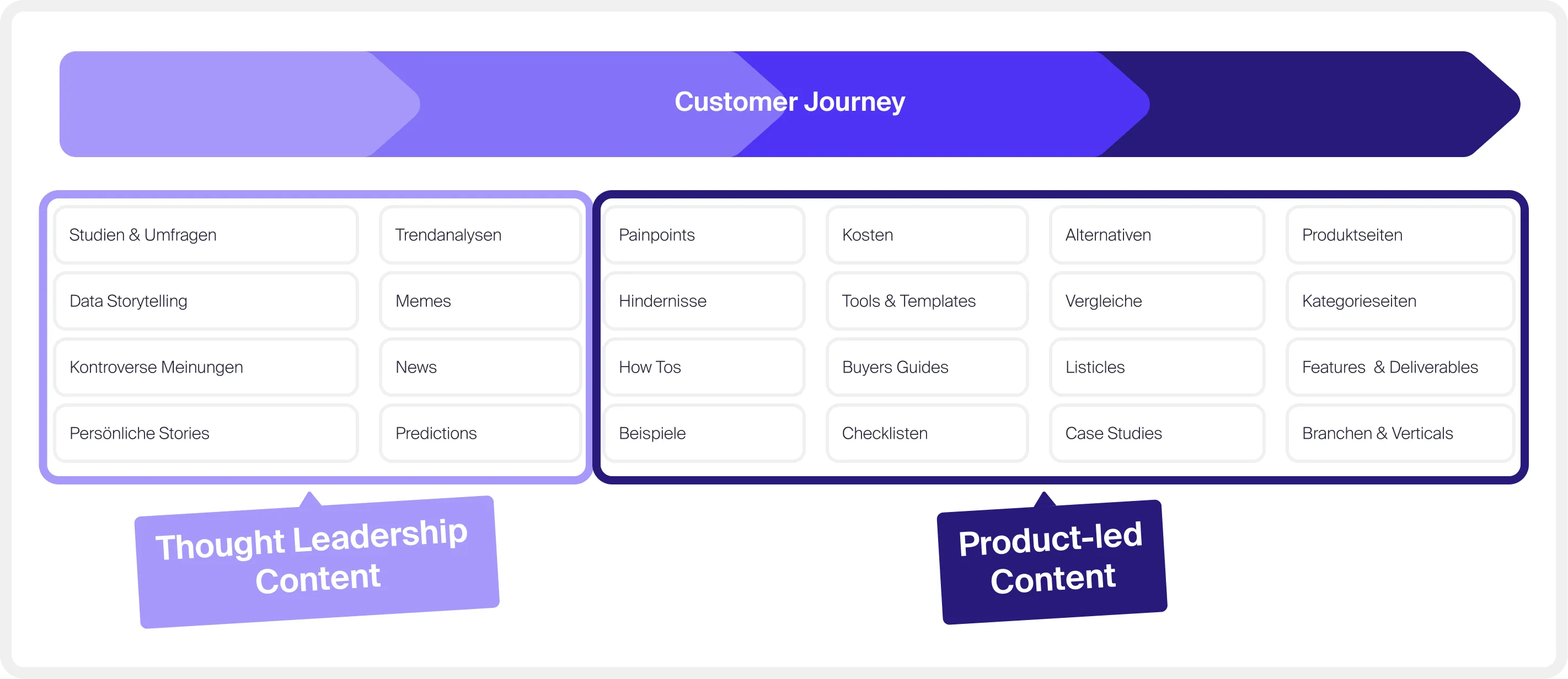
- Two content formats continue to work. Thought leadership content attracts attention with unique insights and perspectives. Product-led content brings users directly to the product. Both formats intertwine along the customer journey.
- LLMO requires technology, content and distribution. Only those who render, structure and distribute content cleanly will be found, read and cited by LLMs. Visibility is no coincidence.
🍿 No time to read? In the webinar on AI search & LLMO, I'll show you the most important strategies directly in the application.
[[callout end]]
Google and ChatGPT are locked in a neck-and-neck race for search supremacy. The only sure trend is that everything will become more AI-driven and dialogue-oriented. There will be no return to traditional search methods.
Ten blue links? They are becoming increasingly rare. The current search journey of many users involves AI overviews and prompting in ChatGPT, Perplexity or Gemini in equal measure. The more direct and coherent the LLMs are in answering a question, the less likely it is that a click on an external website will follow.
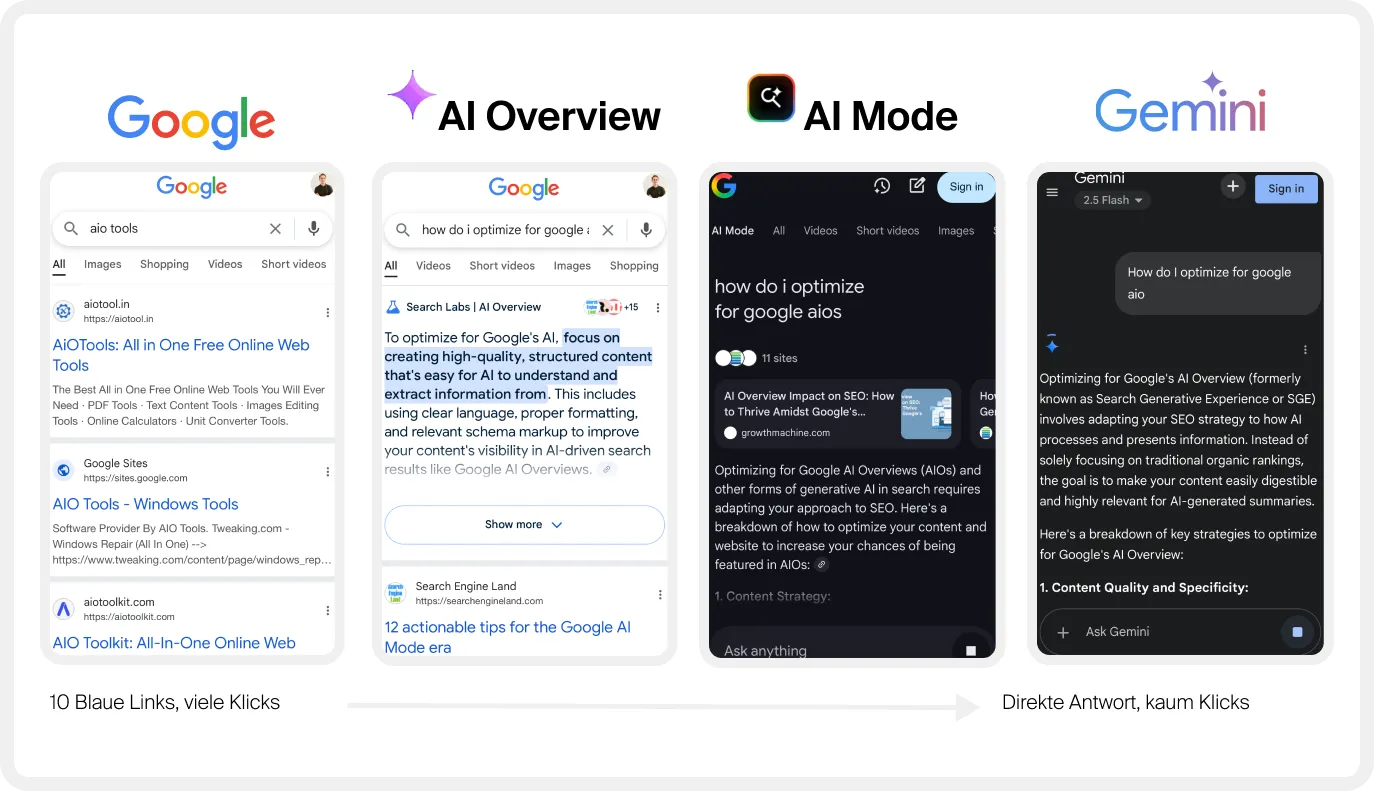
This fundamentally changes the rules of organic search: instead of classic SEO, LLMO (Large Language Model Optimisation) is needed to remain visible when customers are looking for solutions like yours.
What is LLMO?
LLMO (Large Language Model Optimisation) describes the design of strategies to optimise websites for AI-based searches. The aim of LLMO is to ensure that a brand is prominently mentioned in AI-generated responses from ChatGPT, Perplexity, Google AI Overviews and similar tools. Related terms with the same meaning are GEO (Generative Engine Optimisation) and AEO (Answer Engine Optimisation).
How do LLMO and SEO differ?
In principle, the following applies: proven SEO fundamentals remain relevant. Pages with good rankings on Google and Bing have been shown to have a better chance of being included in AI overviews or LLM responses. This is confirmed by a study by Semrush:

This is because LLMs tend to rely on search engine results or are influenced by them. Nevertheless, it should not be ignored that LLMs function fundamentally differently. LLMs such as ChatGPT, for example, often use a broader range of sources than traditional search engines.
Sounds contradictory?
Both worlds overlap, but not completely. Those who focus solely on rankings in traditional search results may remain invisible in the responses provided by LLMs. And those who optimise purely for LLMs may lose visibility in what is still the world's most important search engine: Google.
Here is a comparison of the differences:
The impact of LLMs on organic search results
Let's stay with Google for a moment. Google remains the most important search engine worldwide. In Switzerland, Google is still responsible for a good 95% of organic traffic. And while only minor algorithm updates have been made over the years, Google is now changing rapidly.
Google's AI Overviews (AIOs), which have also been available in the DACH region for a few months now, reduce the click-through rate on classic search results by an average of 30% for example. This also affects pages in position 1 and means that even if your website is prominently mentioned in the AIO panel, this does not automatically lead to traffic.
According to recent studies, panels are skimmed over rather than actually read. Younger target groups trust AI more than older generations and increasingly rely on direct answers as the final decision-making aid for informational searches, without ever leaving the search results.

[[callout]] Practical example: ImmoZins
An example from our customer portfolio: We successfully created wiki and how-to content for ImmoZins between 2021 and 2023. We were able to achieve top rankings in a very short time and organic clicks skyrocketed. The rankings remain stable to this day. However, since spring 2025, clicks have been declining – even though the site appears prominently in the Google AI Overview.

This pattern can be seen in almost all knowledge industries, such as tech, SaaS, finance and insurance: impressions are rising, clicks are falling.
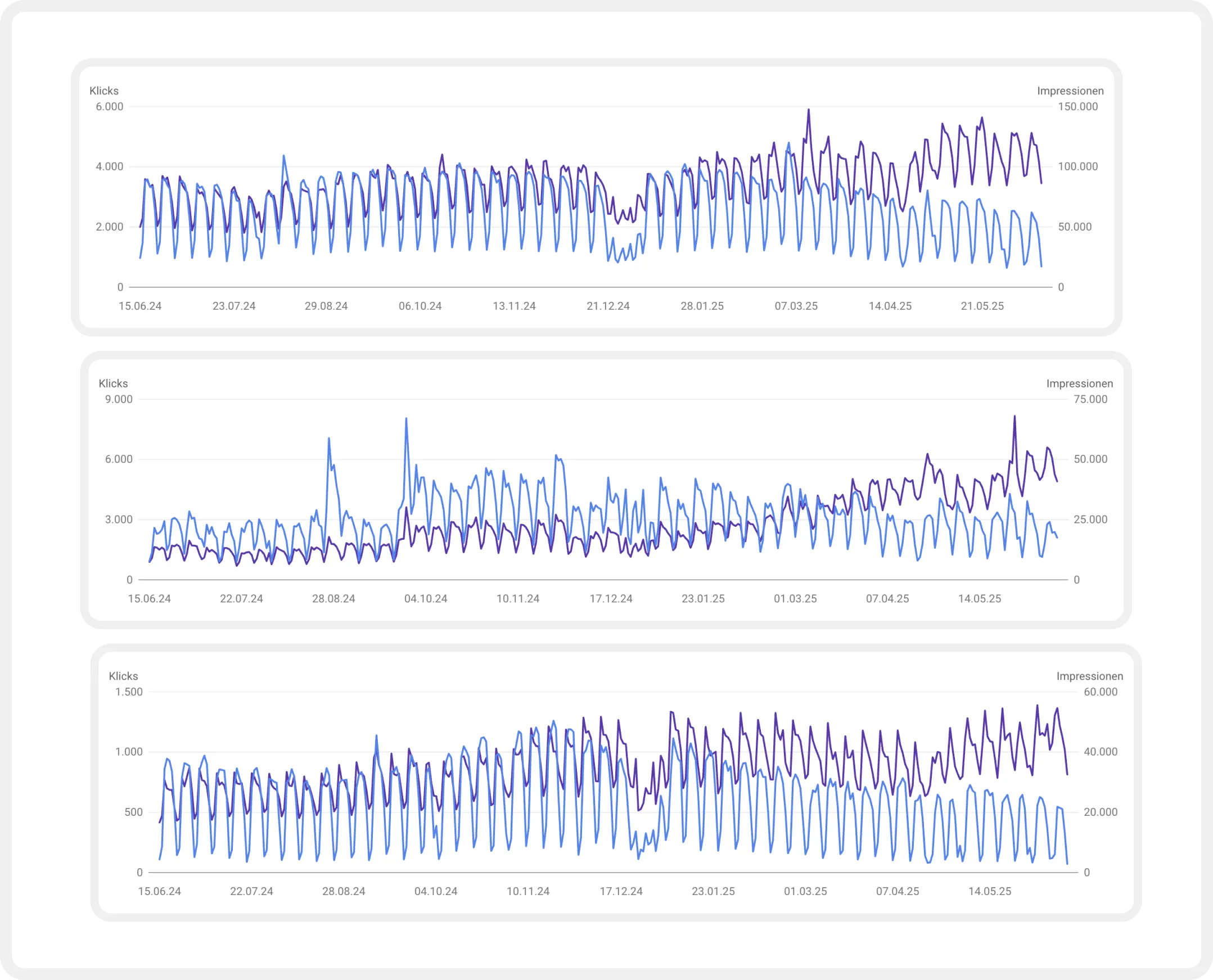
Users see the content, but only a few click on the website for simple definitions or step-by-step instructions. Why should they? They get a suitable answer right in the search interface.
[[callout end]]
The new Reality
Many companies are now becoming aware of the implications of this new reality.
The crucial question is: how should one respond to this development?
Some companies are using new AI tools to produce content more quickly or to optimise existing content for LLMs with a few tweaks. It's the same playbook, just slightly adapted. In my opinion, this approach is problematic.
"AI has simultaneously increased the supply of SEO content and reduced the demand for it." – Ryan Law, Director of Content Marketing at Ahrefs
Yes, companies can now effortlessly pump hundreds of blog posts into search results. But Google or ChatGPT can just as easily bypass your website and answer search queries directly with AI. While the supply of mediocre content continues to grow, demand is being met directly by LLMs.
The consequence: in the coming years, the value of ‘copycat content’, such as wikis, which corresponds to the consensus, will drop to practically zero. This calls for innovative formats and differentiated strategies, which we systematically explore and explain here under the concept of LLMO.
{{blog-cta}}
Measuring success: clicks are just the tip of the iceberg
A strategy begins with identifying the most important problems that prevent you from achieving your goals. But what exactly are the goals we want to achieve with LLMO?
Many B2B companies we talk to are not seeing any decline in revenue despite falling organic traffic. This raises an important question: is traffic still an important KPI? And is a decline in traffic even a problem?
In most cases, my answer is no, because organic clicks are just the tip of the iceberg. That doesn't mean we should stop measuring clicks altogether.
But it's important to put current developments into context. Just because you're getting less organic traffic or have less data on prompts and keywords doesn't mean that search is becoming less important as a channel or that you're losing customers and revenue.
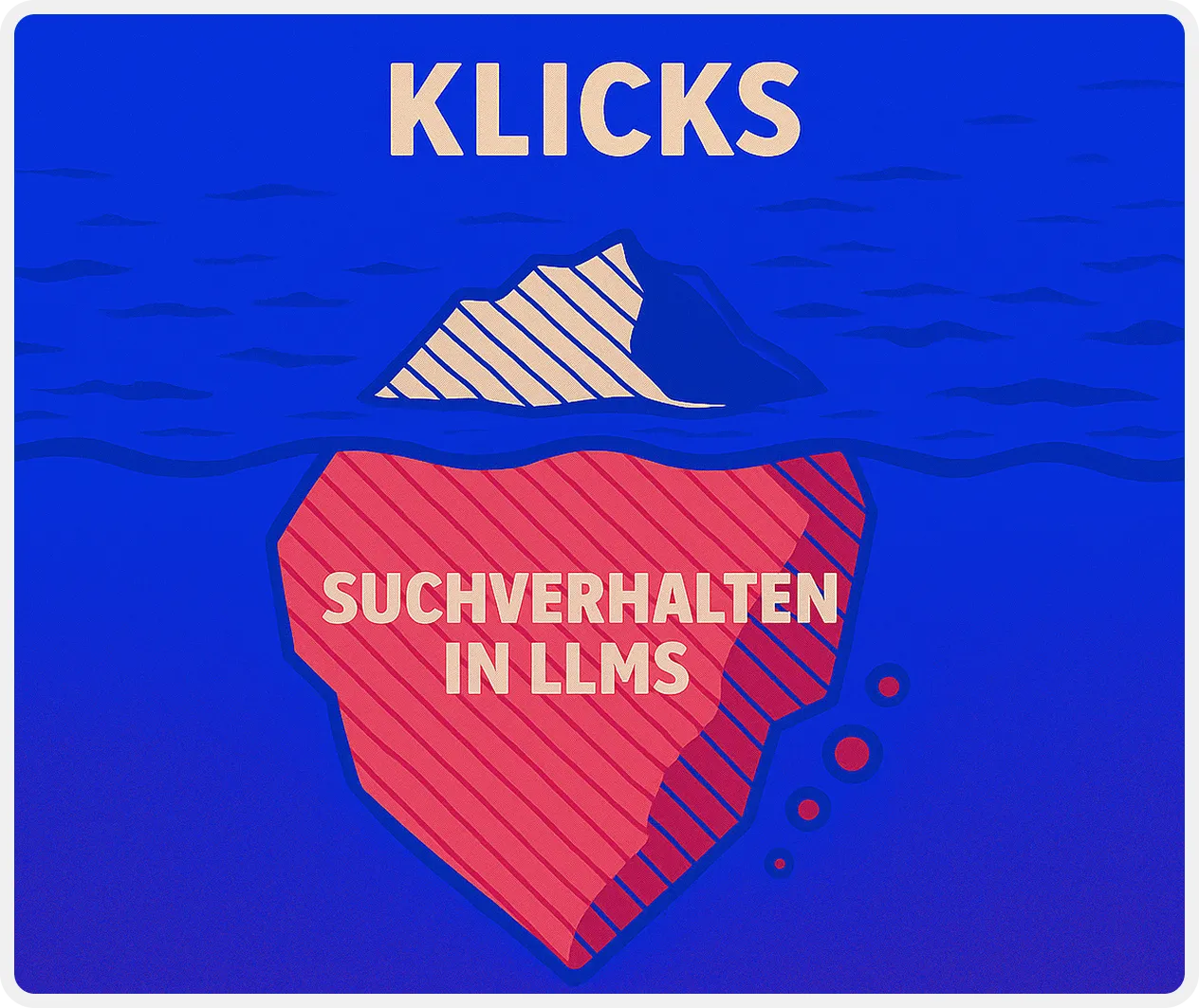
Therefore, it is important to remember that many people today use AI to search for products and receive recommendations.
Market research company Forrester reports that a good 89% of B2B buyers now use generative AI in their customer journey – and the trend is rising.
Nevertheless, the target group often does not click on the search result. So your brand or product may be recommended, but you cannot track this in Search Console or Google Analytics.
We therefore need alternative attribution models:
- Use of specialised monitoring tools (e.g. profound, otterly, peec AI)
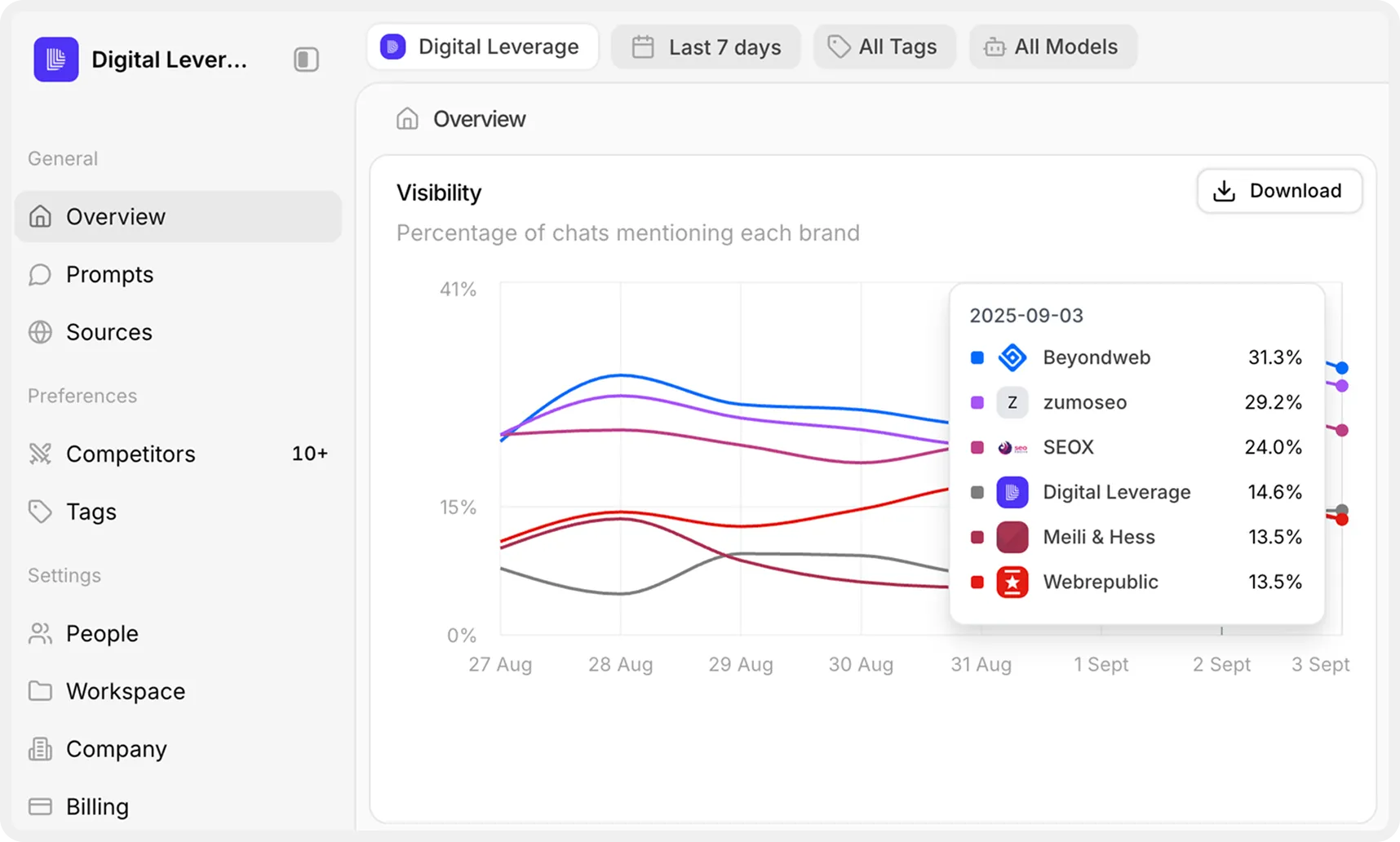
We use Peec.AI ourselves to monitor the visibility of our own brand via selected prompts. This allows us to see in which LLM responses we already appear, where we can hold our own against the competition, and where there is still room for improvement. In addition to benchmarking, analysing the sources is a key factor. In other words: Which websites, forums, blogs, etc. do LLMs access to construct their responses? This allows us to not only evaluate our own visibility, but also to reverse-engineer LLM responses, so to speak, and derive concrete measures.
- Customer surveys and feedback forms with explicit reference to LLMs/AI as the source
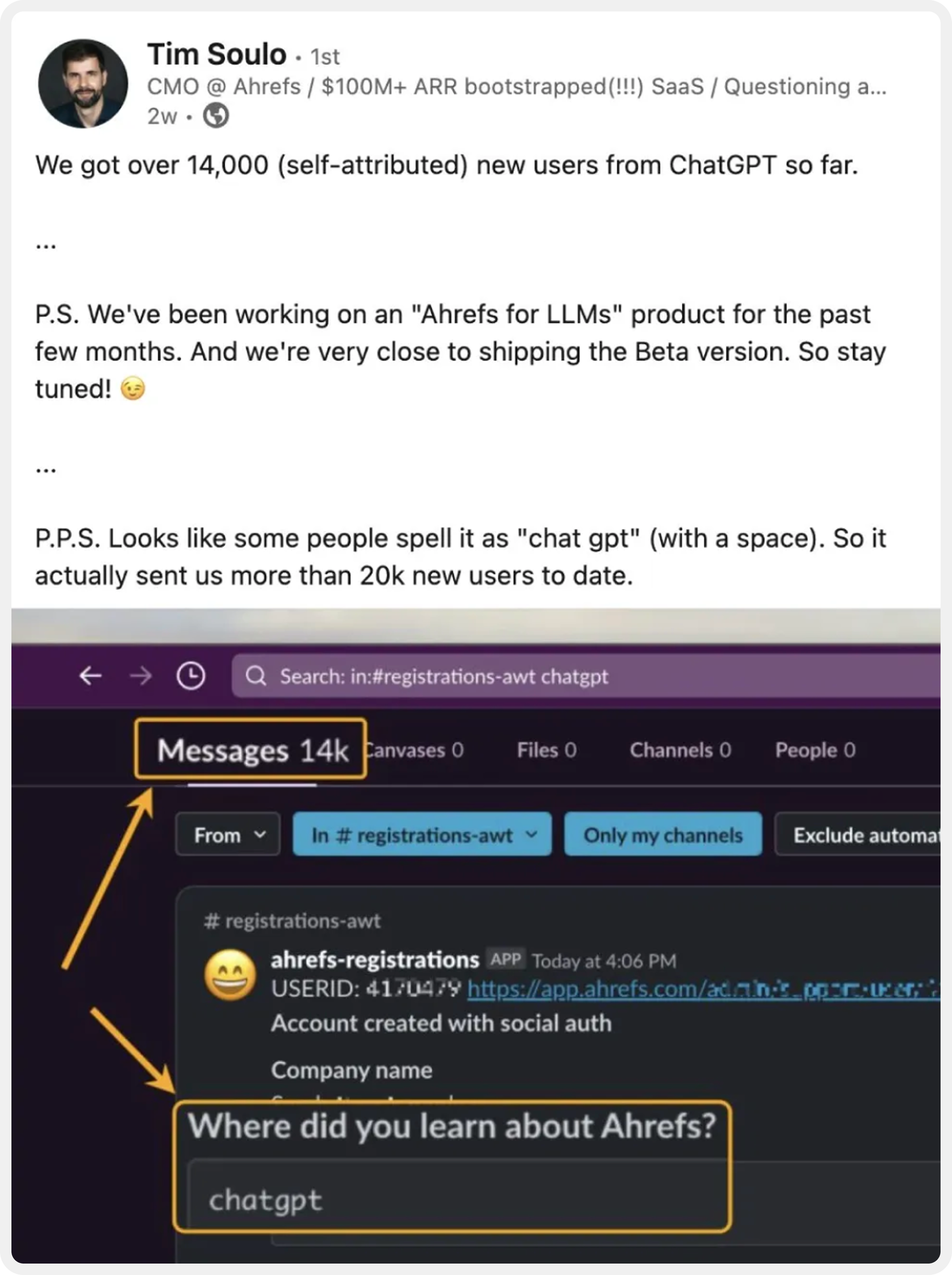
Some companies, such as Ahrefs, are responding to these developments by using forms to ask users directly how they came across the brand. The results are surprising: according to its own figures, Ahrefs has already gained more than 14,000 new users via ChatGPT. This shows that although websites are receiving fewer clicks, they are not necessarily receiving fewer leads.
- Analysis of website traffic and referral sources, where possible
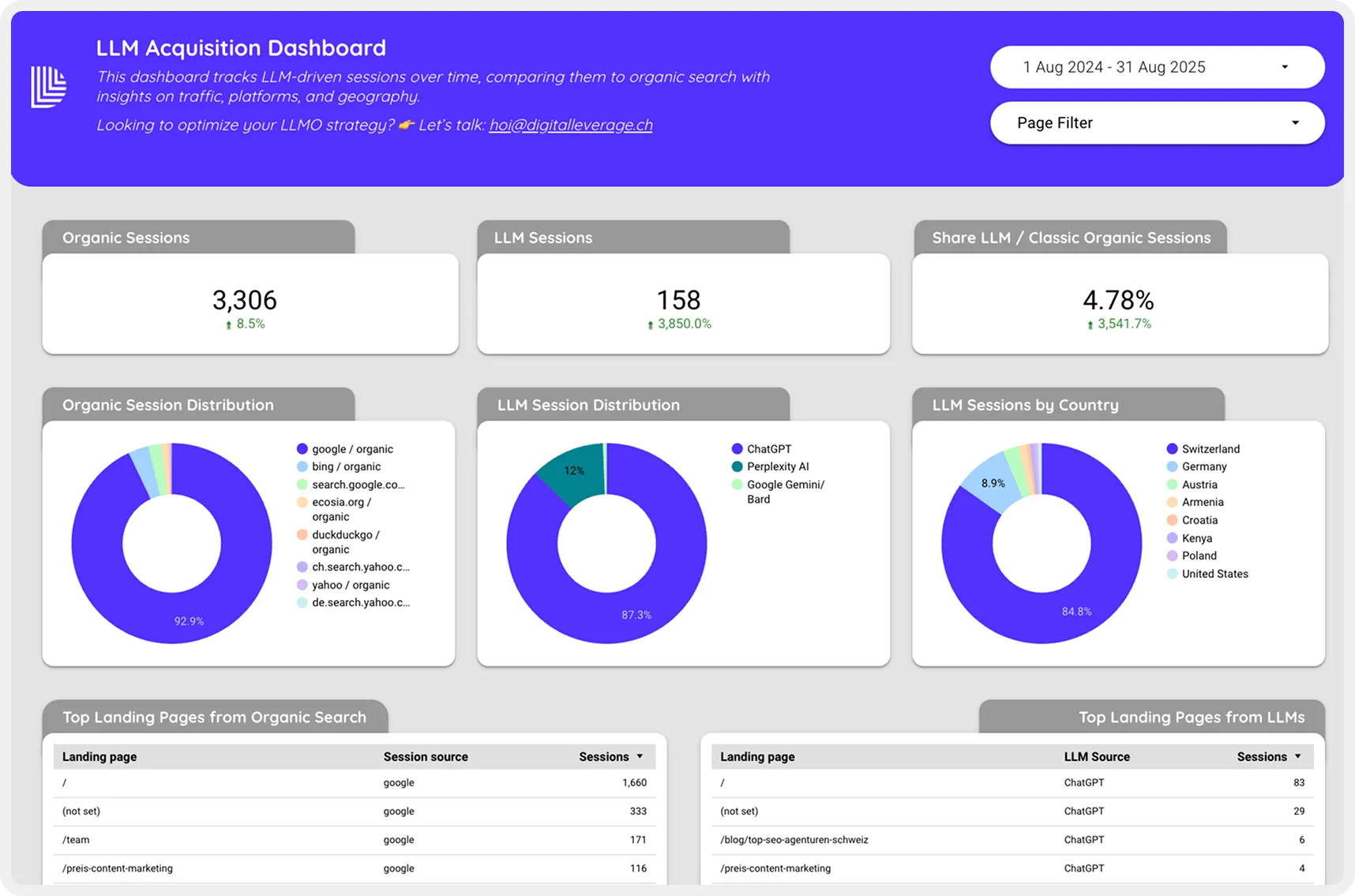
In addition to prompt tracking and customer surveys, referral traffic should also be evaluated, even if clicks are only the tip of the iceberg. We have actually built our own LLM dashboard that does exactly this, which you are welcome to copy.
Please note: Nothing stays the same: Continuous adaptation and optimisation of measures based on collected data and changes in the LLM ecosystem.
LLMs sell your solution for you
So fewer clicks do not mean less impact. Those who are visible in LLMs such as ChatGPT or Gemini are not only found, but directly recommended. The LMMs' response often replaces the click and brings your solution to the right target group at exactly the right time.
LLM users make decisions faster, trust the answers more than traditional search results, and convert better. According to Semush, an LLM referral is on average 4.4 times more valuable than a click from organic search.
And although organic clicks are declining overall due to the LLM trend, traffic to homepages is increasing for many companies for the reason mentioned above: brands are mentioned but not linked.
[[callout]] Example
Here we see this in the example of the search result for ‘best email marketing software’. Mailchimp is mentioned as the best solution, but there is no link. If someone is interested in the software, they will probably type ‘mailchimp’ into Google again and all the traffic will end up on the homepage.

LLMs sell your solution for you. Provided, of course, that you appear for the right keywords and prompts. How exactly? We'll take a look at that in a moment!
[[callout end]]
How do LLMS work in principle?
Even though LLMs often seem like a black box, we know how they basically work: they operate with probabilities and calculate word by word what is most likely to come next – based on what they have learned about certain terms.
If a brand is mentioned repeatedly in connection with a topic or product, the chance that it will also appear in the LLM's response increases.
This is confirmed by a study by Ahrefs, which analysed which factors correlate most strongly with brand visibility in LLMs (especially in Google AI Overviews). ‘Branded web mentions’ were the clear front-runner with a correlation of 0.664.
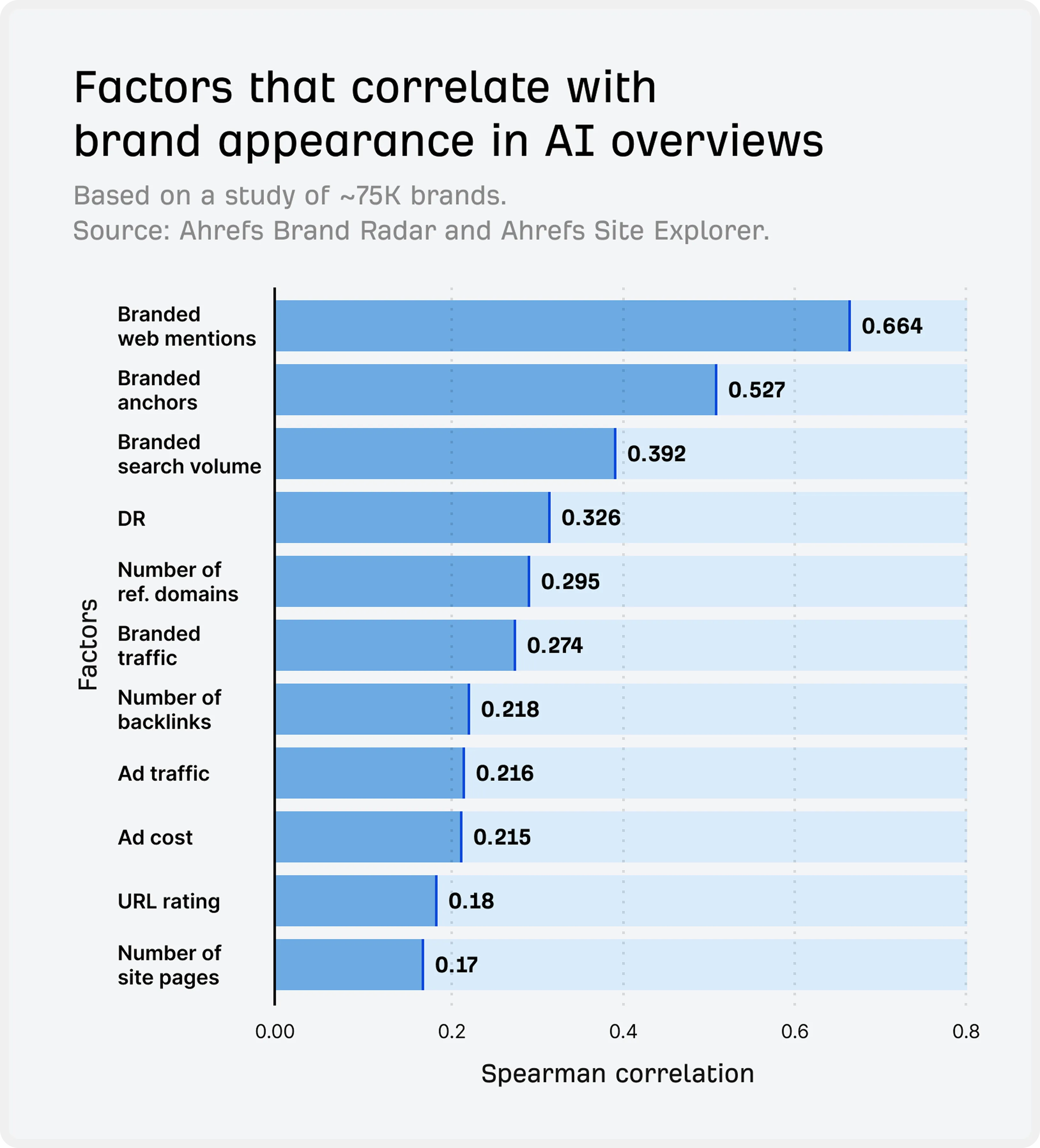
Simply put, the more often your brand appears on websites, the more likely it is to be mentioned by AI in responses to relevant queries. Although correlation does not equal causation, LLMs work by making statistical predictions. For AI to mention your brand in connection with a corresponding product category, these terms must frequently occur together in the training data.
So it's all about associations. That's why you need to find out:
- Which terms and product categories do you want to be associated with?
- And which sources does the respective LLM use?
How can we become visible in LLMS?
For many brands, visibility in LLMs arises in two ways:
- They become the source themselves – e.g. through content on their own website. This is relatively similar to classic SEO.
- They are mentioned in sources that LLMs draw on.
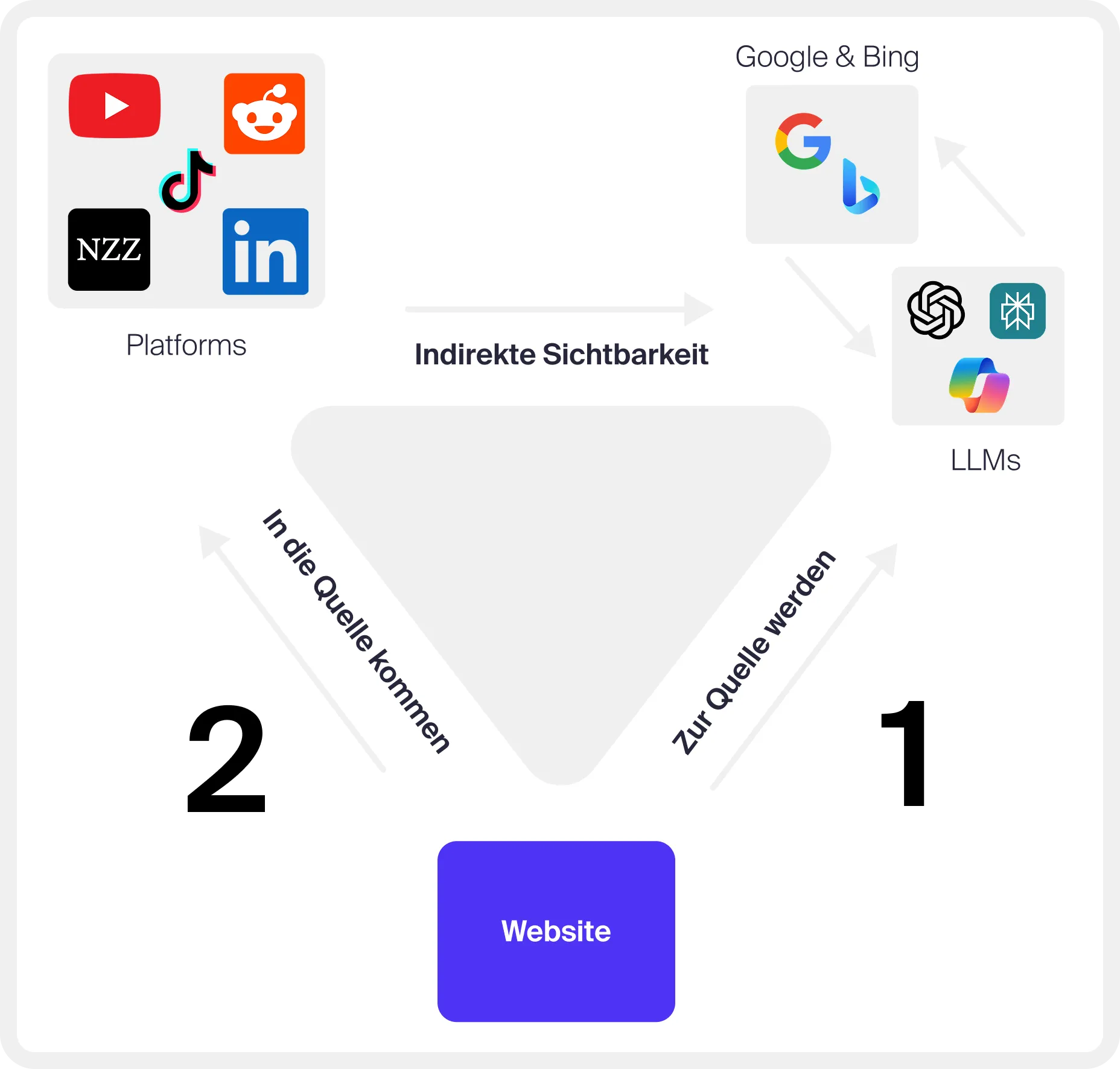
Both approaches are relevant. The key is to appear in the right context.
There are already strategies and tactics you can use to establish your brand directly as a source in LLMs or to bring it into existing discussions on third-party platforms.
Here is a brief overview of the three most important steps for greater visibility in LLMs.
Three steps to an LLMO strategy
Below, we break down LLMO into three concise steps and address current challenges and how we solve them for our customers.
[[callout]]
Want more practical examples and specific optimisation recommendations?
👉 Here you can find our article on the LLMO strategy.
[[callout end]]
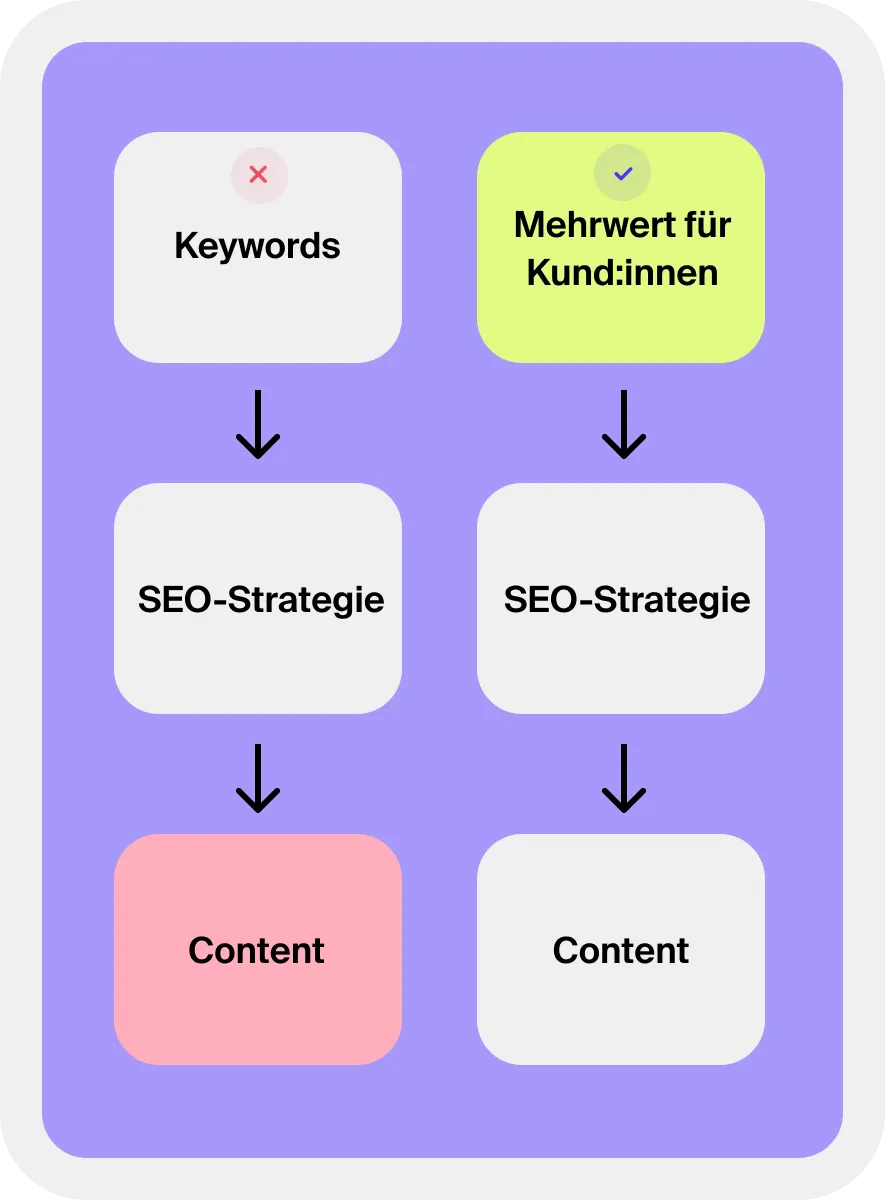
1. Analysis: Focus on proximity to the target group instead of blind keyword focus
The path to a successful LLMO strategy begins with genuine audience research.
In a world without reliable keyword data, proximity to the target group becomes even more crucial. Only when we truly understand the questions, challenges and decision-making processes of potential customers can we create relevant content.
Contrary to the opinion of many SEO consultants, direct insights from customer interviews, sales calls or onsite searches are significantly more valuable than abstract search volumes. After all, prompts are nothing more than questions from your target group.
Our goal is not to increase clicks and rankings, but to make the added value of our offering visible to the target group and convince more interested parties of our solution.
We use our content to make the added value visible to the target group.
This added value looks different for every company, every industry and every target group.
Depending on the target group (B2B vs. B2C, industry, company size), the relevant touchpoints and channels through which users come into contact with LLM-generated responses vary. It is our job as marketers to understand this customer journey and the role of LLMs in the purchasing process and decision-making as well as possible. The easiest way to do this? Ask your target group yourself!
2. Strategy: Utilise impactful content formats
Visibility in LLMs is not created by generic content, but by differentiation.
Thought leadership content brings new perspectives and helps the brand become a relevant voice in the market. Product-led content clearly shows which solution is suitable for which problem and supports potential customers in the purchasing process.
Both formats engage at different stages of the customer journey and strengthen both visibility and trust.
3. Implementation: Optimise and distribute content
In order for LLMs to recognise and process content, it must be technically accessible and clearly structured. At the same time, targeted distribution is required: via social media, communities, partner sites, newsletters or adverts. This is the only way to get your brand directly or indirectly into the sources of LLMs.
Visibility in AI responses is not only created by the content itself, but also by external mentions and smart distribution.
[[callout]] Practical Example Thought Leadership: Data Study
We published our study on domain strategy on our blog, translated it for our newsletter, and posted it several times on LinkedIn. A welcome spillover effect was that the study was picked up and discussed by a German SEO podcast. Overall, we received 26 mentions and backlinks by sharing this study.

[[callout end]]
Would you like to see more examples and specific optimisation measures? Continue here for a deep dive into your first LLMO strategy.
Conclusion
The shift towards direct answers is transforming people's search, decision-making and purchasing behaviour. While classic SEO principles remain important, it is no longer enough to simply optimise for rankings. If you want to be visible in the answers provided by ChatGPT, Gemini or Google AI Overview, you need to understand how AI works – and respond accordingly with LLM-compliant strategies.
This means moving away from generic ‘copycat content’ towards product-led or thought leadership content with real added value, including an appropriate distribution strategy. Instead of focusing solely on traffic for your own website, the aim now is to become visible in the important discovery, evaluation and decision-making processes throughout the entire search journey.
[[callout]]
Not sure where to start? We'll help you set the course for a successful LLMO project.
[[callout end]]
