
Content distribution: 5 tactics for maximising reach and traffic
Content distribution: 5 tactics for maximising reach and traffic
Imagine you go fishing. You drive to the nearest lake, walk to the shore, put a piece of cheese on the hook and cast your line. What are the chances of catching something?
Sure, you might get lucky. But there's a good chance you'll go home without dinner. It would be much smarter to have a plan: find out what fish are in that lake and whether they even like cheese (what the hell?). That way, you'll increase your chances of making a big catch.
Content distribution is similar to fishing.
Publishing content and crossing your fingers that it will be seen by your target audience is pointless! In far too many cases, articles and posts in online marketing are simply written and published without considering how to get the content to the target audience.
We call this approach ‘publish and pray’. Despite ‘praying’, in most cases, success fails to materialise: a good 90.63% of all web content receives no organic clicks due to a lack of distribution.
However, companies that rely on social media and SEO cannot afford to take this approach. It is time to stop throwing content haphazardly into the ‘digital sea’ and hoping for the best. Instead, we need to take a strategic approach to our content distribution and consider...
- …which fish we want to catch (Market).
- …where we have the best chance of finding hungry fish (Channel).
- …which bait we need to use (Content).
- …how we land our fish (Product).
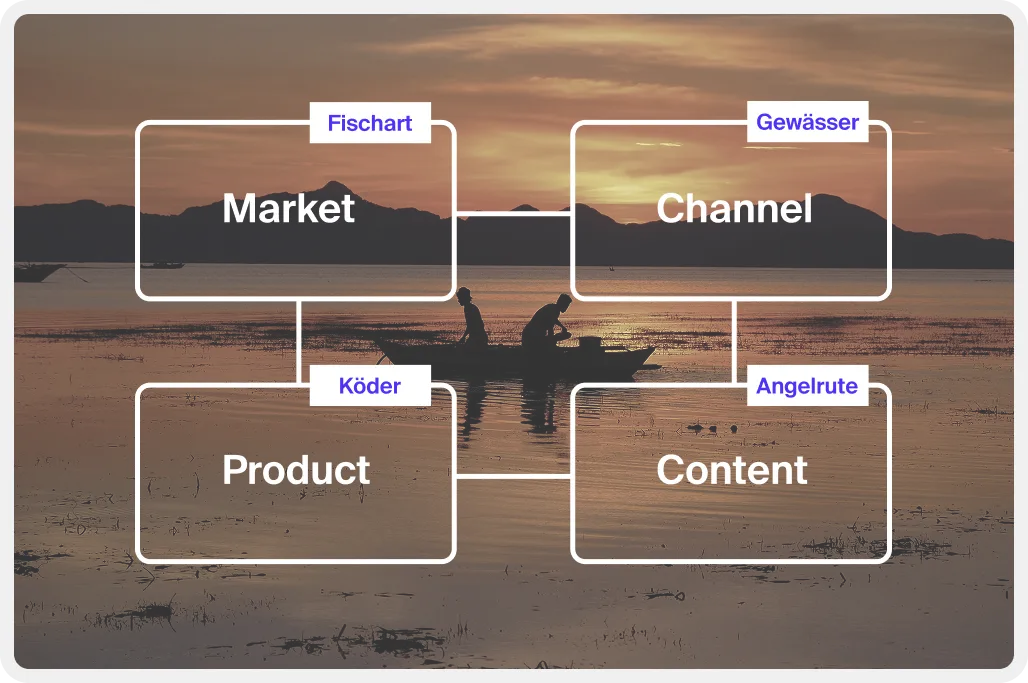
5 Principles for a successful Content Distribution Strategy
In this article, we will show you step by step how to create a successful content distribution strategy. All of the following tips and examples are based on the five principles mentioned above.
1. Develop a ‘distribution first’ mindset
Content distribution should not be considered just before publishing. In order to reach your target audience and get them to interact with your content and, in the best case scenario, even become customers, you need more than just the right keyword or a catchy headline that is tacked onto the text just before publication.
Rather, you need to think about who you are writing the content for, why your target audience should read it, which channel it works best on, and how it supports your marketing or business goals during the strategy and ideation phase (before you even write a single line of text). You need a content distribution strategy.
2. Maximise the added value of your content on every platform
There is little point in sharing a mere link without any context on a platform. This is unimaginative self-promotion – users can smell it a mile off and have neither the time nor the inclination to click. The result? Poor performance, few clicks, no engagement.

So ask yourself: How can you use your content to create added value for your target group directly on the relevant platform?
Adapt your content so that it fits the respective channels and directly addresses the needs of your target group. And don't forget: the goal of the respective platforms is to keep users there for as long as possible. Adapt your content accordingly so that it is as easy as possible for your target group to consume.
3. Content distribution runs across more than one channel
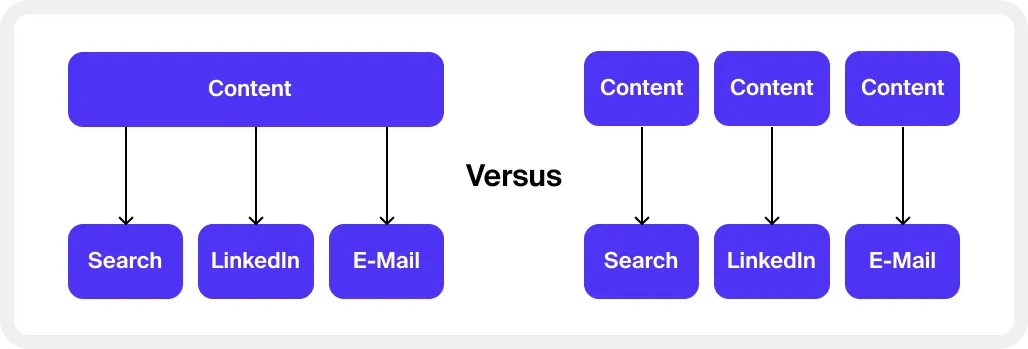
Distributing content across multiple channels, known as ‘repurposing’, is an important aspect of successful content distribution. However, repurposing does not simply mean sharing the same content on different channels. Rather, it is about adapting the content and format to the respective channel in order to offer the audience on the corresponding platform as much added value as possible.
This requires careful consideration during content creation. You can always incorporate certain key messages, but it is crucial to prepare and adapt them for each channel in order to maximise engagement. Simply copying and pasting an X post on LinkedIn may work for Gary V., but it is anything but effective for up-and-coming brands.
4. Start small and validate quickly
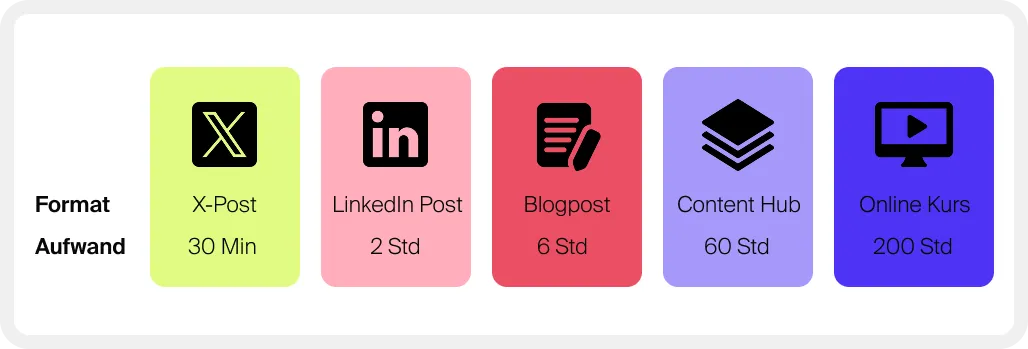
An important principle for a successful content distribution strategy is to start small and quickly check which formats and channels work best.
It's worth experimenting with new formats from time to time. Start small and test your content with a tweet, for example. Once your assumptions and hypotheses have been validated, you can invest more and more in more complex formats such as LinkedIn posts, a video, a blog post or an entire online course.
It is often difficult to predict which topic will work best in which format on which channel to reach your target audience. You don't need to take a linear approach, but should be willing to experiment and open to adjustments.
That doesn't mean you have to chase every trend – tried-and-tested strategies can still work well. Nevertheless, experimenting allows you to strike gold with your content distribution plan.
5. Boost your reach
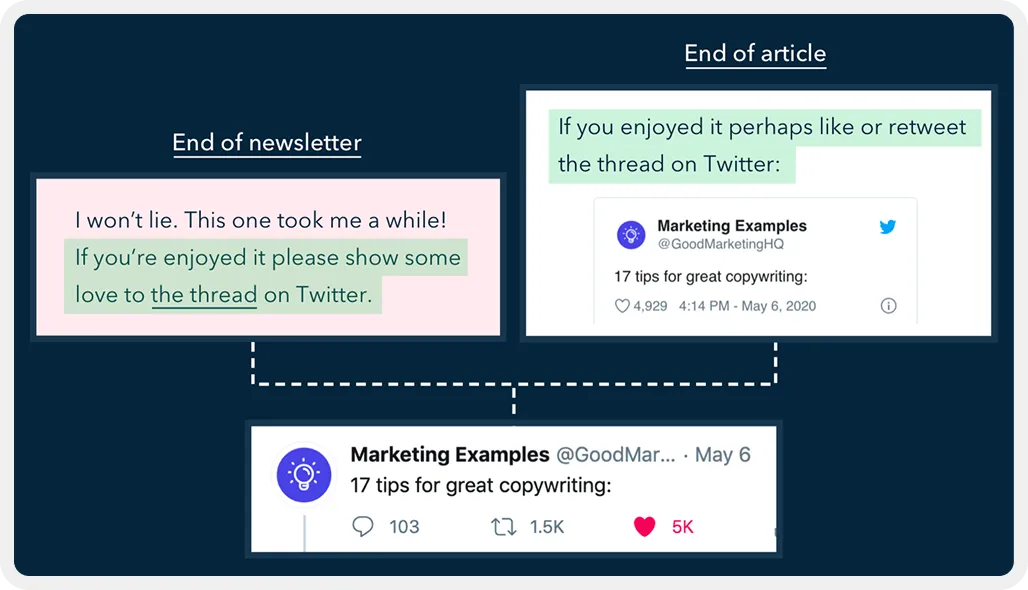
Harry Dry is one of the best when it comes to promoting your own content. He knows how important a consistent message is:
"The way users share your content is just as important as the way you share it yourself. You don't want people sharing different things on different platforms. Instead, you want everyone to share the same thing on the same platform. I forward everyone who likes my article to the same Twitter thread. That turns 50 retweets into 500."
It is not only important to draw attention to your content, but also to establish and activate contacts. Here are a few tips:
[[callout]]
- Get in touch directly with people in your network and share your content. But be careful: you need a good reason for contacting them. Make sure that the content you want to share with the person (a so-called amplifier) is really relevant to them and their network. Ideally, your amplifiers should have an audience that is relevant to you and as large as possible.
- It helps if you have interacted with this person before, as this increases the likelihood of a response (the principle of reciprocity). Comment on other people's posts or give them a like.
- Make it as easy as possible for people to share your content by including the relevant links (see example from Harry Dry).
[[callout end]]
Don't forget to update old articles and refresh content. You can do this by changing the introduction or summarising the content. This allows you to reuse content and present it to your target groups in a new guise in order to reach even more people.
And last but not least: distribution never stops! It's important to ensure that you keep spreading your content and give it the chance to reach as much of your target audience as possible.
{{blog-cta}}
So how does content distribution work in practice?
Let's summarise again: you should make sure that your content reaches the right target group on the right channels. To do this, it is crucial to understand the various distribution options available to you.
In content marketing, a distinction is made between ‘owned’ channels (such as your website or newsletter), “earned” channels (your organic reach on Google or social media) and ‘paid’ channels (paid campaigns or individual advertisements).
Ideally, you will have already conducted interviews during the analysis phase and will have a clear idea of which channels your target audience uses. Now you can start to break down the channels and plan your content distribution strategy step by step. Below, we break down the most important channels for you.
Search engine optimisation or organic search
One distribution option is organic search. There are several key factors that are important when optimising and preparing your content if you want to do successful SEO.
- Tech: First, you need a search engine-friendly setup in order to rank at all – otherwise, even the best content won't help. On top of that, you need on-page SEO and backlinks.
- Content: How does your content need to be prepared in order to cover the search intent behind a keyword? Much more important than using a keyword as often as possible in the text is to answer the searcher's question in a targeted manner. Only if you think about this early on will distribution work.
- Links: The more backlinks, the better the rankings. And the better the rankings, the more backlinks you tend to get. These are particularly important for SEO because they can lead to a self-reinforcing effect.
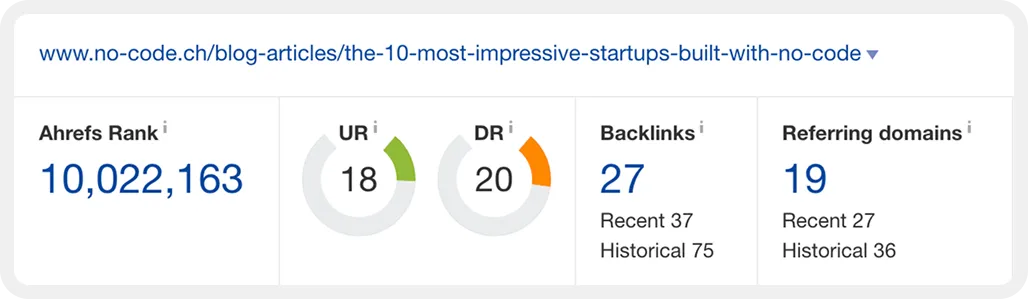
Here's an example: For HuggyStudio, we wrote a listicle of the most successful ‘no-code’ start-ups. Because this content was one of the first resources on the topic, it was linked to often and we were able to record 27 backlinks from 19 different domains. The article on ‘no-code’ for HuggyStudio performed well!
Organic Social
Social media is an effective way to distribute your content. It is important to choose the right format for the content in question. Formats that work well include how-tos, quick wins, emotional or humorous content, and memes (yes, even on LinkedIn). The characteristics of the respective algorithms can also be decisive in how your content performs.
- Be active yourself: On LinkedIn, for example, it's not enough to just post. You should be active on the platform before and after posting and interact with other people and posts. For example, if you tag people but they don't interact with your content, the performance of your post will suffer. Conversely, additional interactions always lead to greater reach. Therefore, choose people carefully before tagging them or make sure you have interacted with them meaningfully beforehand.
- Hashtags: When it comes to hashtags, ‘less is more’ also applies. Use more than three, but less than ten.
- Frequency: The most important thing is consistency. Post regularly (at least twice a week) and stick to your topics.
- Trends & Opinions: Keeping up to date with trends and news and taking a controversial but honest approach generates more attention. It is also advisable to use images or videos. And you can mention people for whom your content is important and ask for their opinion.
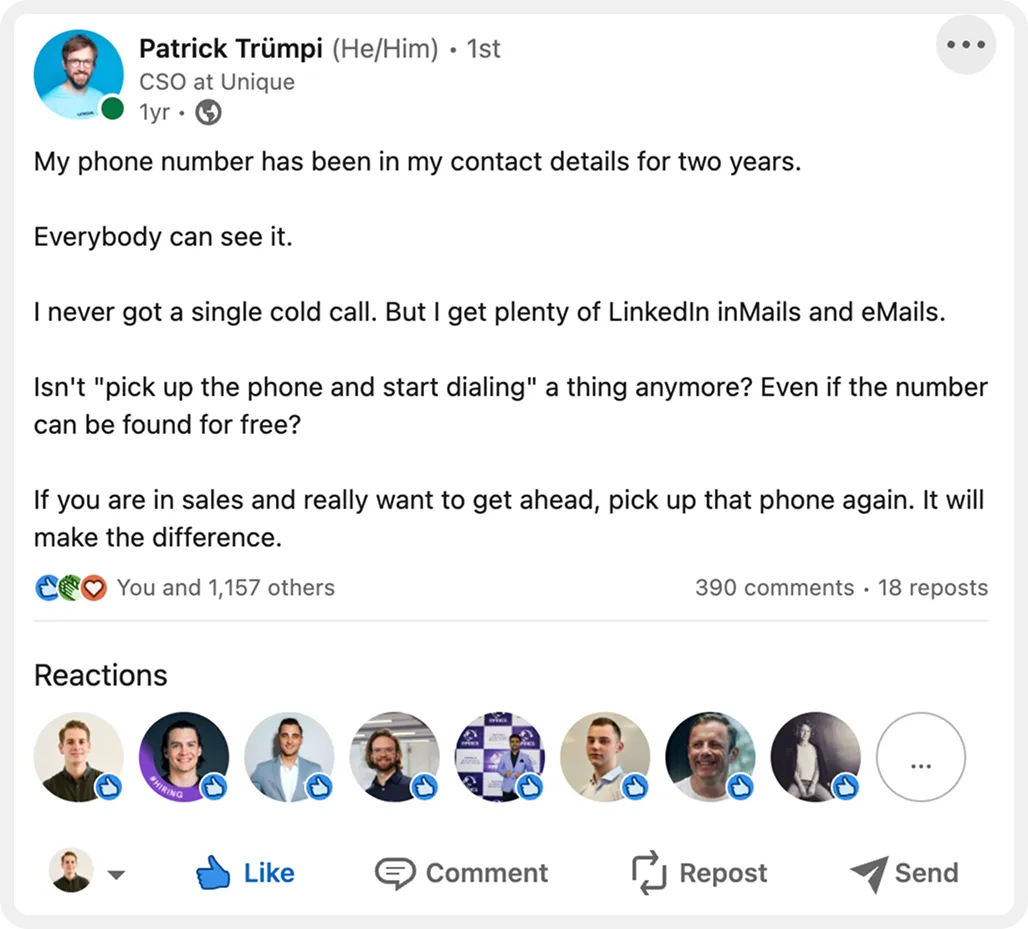
A good example of successful distribution via social media is the following LinkedIn post by Patrick Trümpi.
- The post deals with the challenges of cold calling and expresses a strong opinion. Patrick was aware that this is a controversial topic and thus added fuel to the fire.
- His position as CSO further reinforces this effect. Most sales professionals (his target audience) think that a CSO is bombarded with calls every day. Patrick shows us that this is not the case and gives us a glimpse behind the scenes..
- Patrick has a network of over 11,000 followers, which he has built up over the last 1.5 years through consistency and targeting his audience.
- He doesn't just post occasionally, but every single day! In his posts, Patrick addresses important pain points in the industry and thus receives a lot of support from his target group.
- His post was liked, commented on and shared by experts who themselves have a very wide reach. Patrick calls it ‘luck’, but at the same time he mentions how important it is to interact with the community on a daily basis.
Paid advertisements: Paid ads, social ads and native ads
Paid advertisements, or ads, are often used to directly promote products and services. But distribution via paid ads can be an exciting tool for reaching your target audience, not only for products and services, but also for content further up the funnel (e.g. unaware, problem aware or solution aware). This is because the further up the funnel we are, the less competition there is in the advertisements.
"Buffer", for example, offers a tool for managing social media channels and content, but often also promotes content that is not directly related to their product. They focus on content that is already performing well organically and push it further. This gives users the opportunity to interact with the brand on a different, personal level, which might not have been possible with traditional product advertising. Buffer addressed the community here without product placement. In this way, Buffer learns more about its target group and creates interactions between them and the brand.

External platforms
Platforms such as Hacker News and Reddit can also be an effective way to distribute your content. If your post is considered relevant and interesting, it will receive upvotes and a wider reach. However, if it screams self-promotion too loudly, it won't work. It is therefore important to become part of the community and prepare content accordingly in order to maintain credibility.
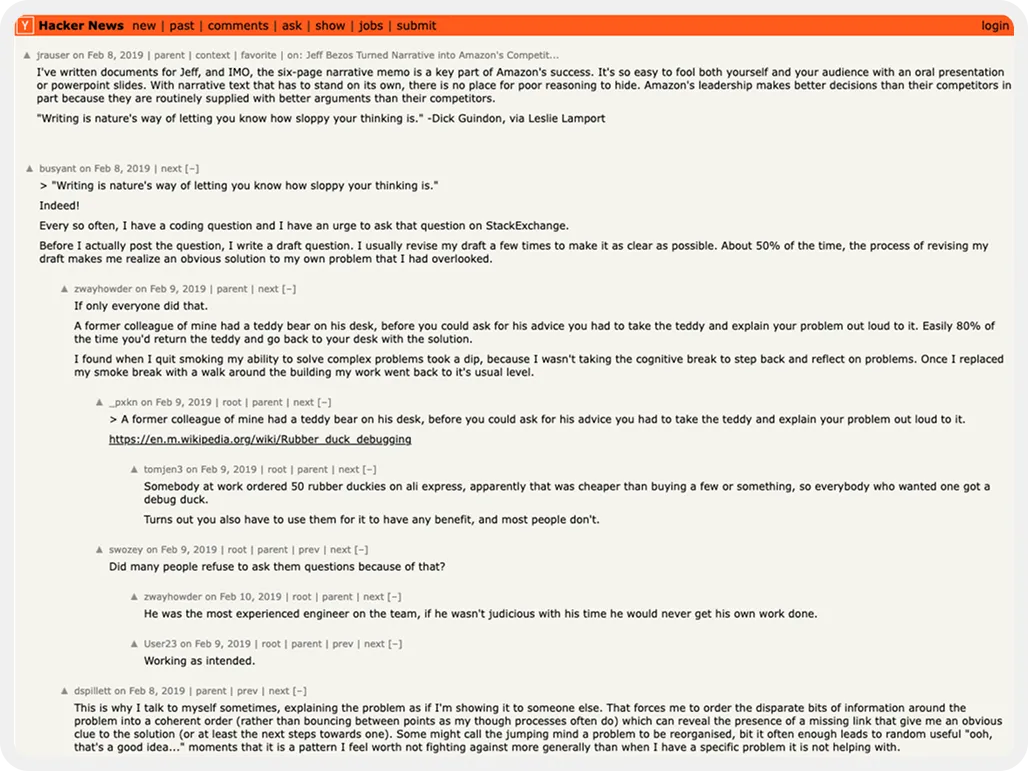
Slab's article ‘How Jeff Bezos Turned Narrative into Amazon's Competitive Advantage’, for example, went viral and reached 14,477 views in a single day. Almost all of the traffic came from Hacker News. How did this happen? Affiliation (with well-known companies such as Amazon) and name-dropping (such as Jeff Bezos) create credibility and spark fascination. Strong opinions also provide fertile ground for good discussion.
Newsletter
If your content is well packaged and prepared, a newsletter is the most efficient way to distribute it. But don't get bogged down in too many topics. Instead, focus on one main message or topic and work with a suitable format.
Newsletter subscribers are worth their weight in gold, as they can be reached directly via email, regardless of platform, without any algorithms getting in the way. And you have maximum freedom in the design and choice of format.
[[callout]]
A few examples:
- Summaries: Aleyda Solis' #SEOFOMO newsletter summarises the latest news from the SEO industry in a concise and succinct manner.
- Advice: James Clear's highly successful 3-2-1 newsletter provides three pieces of advice, two quotes and one question on different topics every week.
- Use cases: In our own newsletter, SEO Examples, we regularly analyse exciting use cases and clearly explain the SEO tactics used.
[[callout end]]
One way to promote your own newsletter is to sponsor other newsletters, as this can lead to new subscribers and possibly even paying fans.
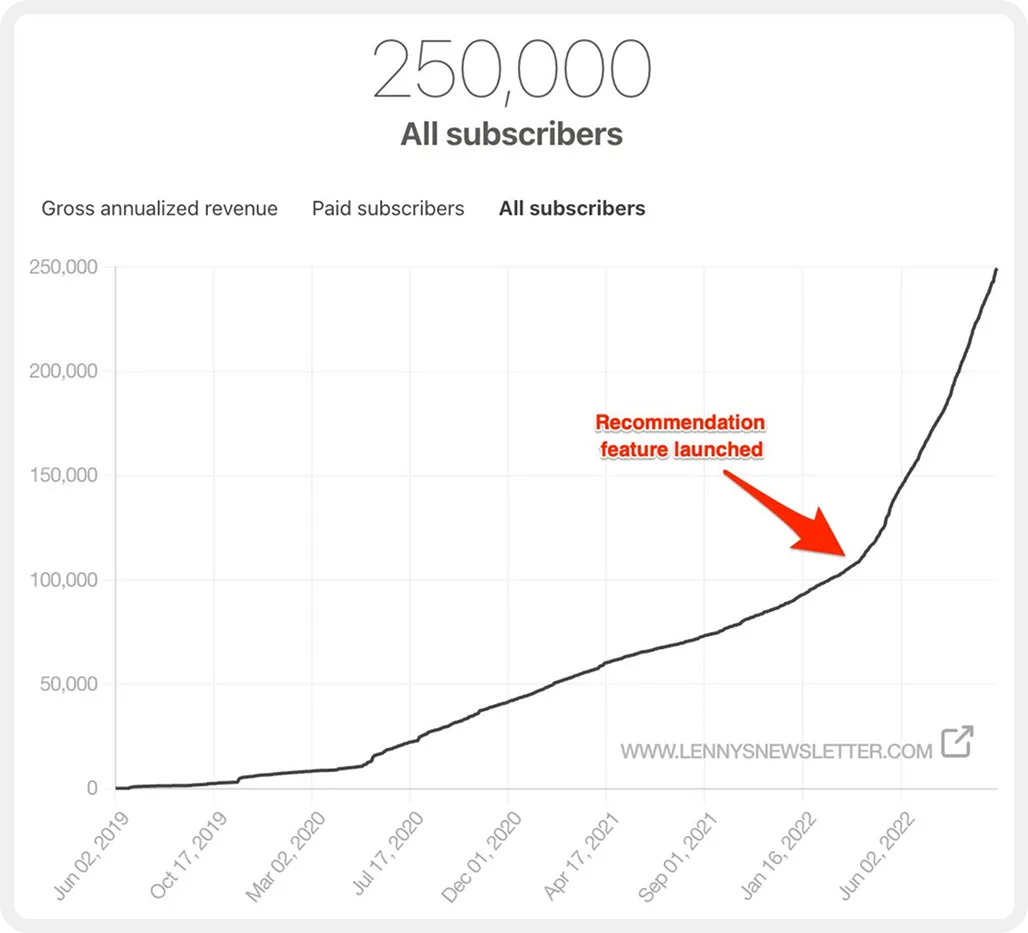
Lenny Rachitsky's newsletter, for example, has gained a large following of over 270,000 product managers and growth professionals, with 78% of new subscribers coming from recommendations in other newsletters.
Get the most out of your content
What you should have learned so far: Distributing content is just as important for the success of your marketing as finding the right ideas and writing strong copy. And before you start, you should think through the process from start to finish.
Many exciting articles and ideas are not shared or do not reach their target audience because the authors have not thought about distribution or are promoting their content in the wrong places.
They end up like the cheese that our fisherman carelessly threw into the lake. The problems lie only partly with the cheese. It could actually be used to catch eels or barbel. You just have to prepare it properly.
The same applies to your content: preparation and planning are everything when it comes to getting the most out of every piece of cheese – err, I mean content.
